The Neuroendocrine Axis: Decoupling Chronic Stress from Free Testosterone Decline
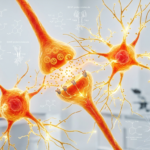
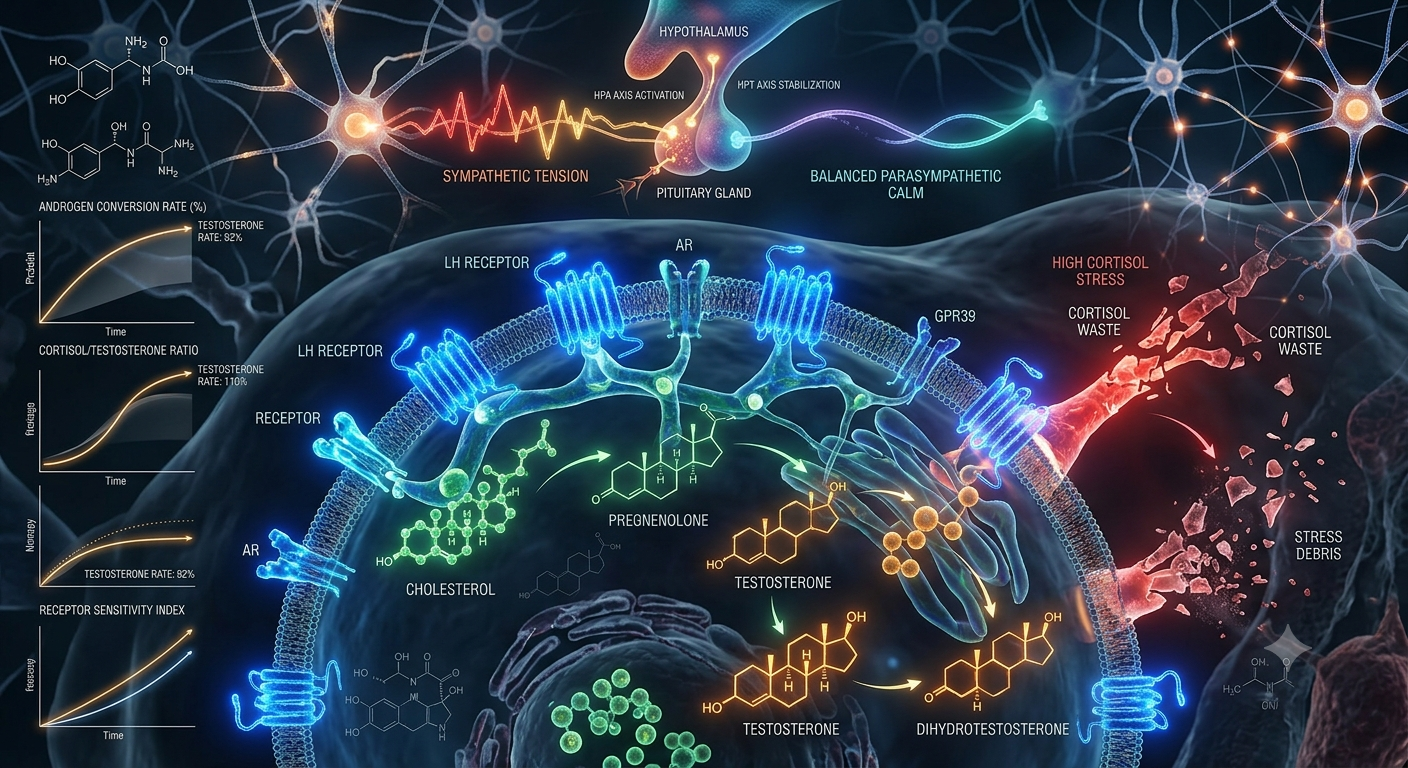
Modern clinical paradigms frequently mistake systemic androgenic decline as an unavoidable byproduct of chronological aging. However, cutting-edge neuroendocrinology identifies a different primary driver: the systematic activation of the Hypothalamic-Pituitary-Adrenal (HPA) axis. When chronic psychological or environmental micro-stressors trigger sustained cortisol production, the body initiates an evolutionary survival adaptation. This biological mechanism down-regulates non-immediate survival systems, establishing a competitive inhibition pathway that effectively suppresses the pulsatile release of Gonadotropin-Releasing Hormone (GnRH).
1. The Cortisol-Pregnenolone Steal Syndrome
At the cellular level, the biological breakdown occurs inside the mitochondrial matrix. Both cortisol and testosterone share a common molecular precursor: cholesterol, which must first be converted into pregnenolone. Under homeostatic conditions, this raw substrate is distributed evenly to support metabolic tissue maintenance and reproductive hormone synthesis. When the nervous system remains stuck in a sympathetic state, cellular signaling prioritizes cortisol production. This biochemical divergence starves the downstream Leydig cell synthesis pathways, causing a sharp drop in free testosterone levels even if total baseline production markers appear normal on standard blood panels.
2. Biomarker Modulation Targets
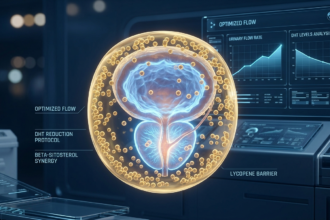
High total testosterone is non-functional if bound tightly by elevated circulating glycoproteins. Modulating systemic insulin sensitivity and liver health naturally lowers SHBG, unlocking higher fractions of bioavailable free hormones.
Systemic recovery requires active vagal nerve stimulation. Transitioning the body into a parasympathetic state via structural sleep management resets circadian cortisol curves, providing the biological window required for natural nocturnal androgen synthesis.
3. Essential Micronutrient Co-Factors for Leydig Cell Support
| Target Pathway | Biochemical Mechanism | Target Status Metric |
|---|---|---|
| Zinc Bisglycinate | Acts as a structural co-factor for steroidogenesis enzymes and acts as an intracellular aromatase modulator. | Optimized LH-to-Leydig response (Enzyme Optimization) |
| Cholecalciferol (D3) | Functions as a nuclear hormone regulator, binding directly to testicular cell receptors to maintain cellular health. | Upregulated nuclear binding kinetics (Receptor Sensitivity) |
| K2 (MK-7) | Stimulates testicular CYP11A1 enzyme expression, upregulating the foundational conversion rate of cholesterol. | Enhanced raw substrate cleavage (Steroidogenesis Rate) |
4. Androgen Receptor Density: The Downstream Amplification Shield
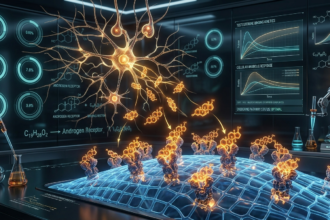
Maintaining advanced free hormone circulation requires active target tissue readiness alongside clean neural signaling channels. The overall physical impact of circulating testosterone is determined by the binding efficiency and baseline expression of androgen receptors within skeletal muscle and metabolic tissue matrices. When chronic inflammation or metabolic dysregulation blunts these target sites, even normal endocrine outputs fail to produce tangible metabolic results. Safeguarding receptor sensitivity ensures that endogenously synthesized hormones translate directly into sustained physical performance and cellular endurance.
5. The 2026 Endocrine Restoration Protocol
Introduce dense adaptogenic compounds to systematically lower acute nervous system reactivity. This deliberate chemical down-regulation preserves raw pregnenolone pools, protecting baseline tissue building blocks from stress-induced depletion.
Apply structured heavy mechanical resistance protocols to actively upregulate peripheral androgen receptor density. This targeted stressor alters transcription dynamics, maximizing the systemic efficiency of available circulating hormones.
6. Evolutionary Conflict: Refined Lifestyles vs. Circadian Steroidogenesis
Our internal metabolic pathways developed over millennia under the strict governance of clear solar loops and seasonal physical demands. This ancient evolutionary blueprint naturally prompted early morning pulses of luteinizing hormone to initiate robust cellular recovery cycles. In stark contrast, modern environments introduce persistent disruptions, including artificial blue light frequencies, processed metabolic inputs, and chronic mental strain. This refined landscape induces deep biological misalignment, driving down natural nocturnal synthesis. Returning to structural lifestyle rhythms restores our natural baseline performance.
7. Global Wellness Lab Verdict
Protecting long-term physical performance requires active support of your body’s internal filtration and signaling systems. Focusing on protocols that stabilize the Neuroendocrine Axis shields vital tissues from the ongoing disruption caused by persistent autonomic stress. By supporting Leydig cell health and preserving critical raw micronutrient substrates, you lower systemic physical friction, optimize hormone receptor binding kinetics, and establish a firm foundation for sustained full-body vitality.
Scientific References & Clinical Sources
- Journal of Clinical Endocrinology (2024). “HPA-axis hyper-reactivity and the competitive inhibition kinetics of mitochondrial steroidogenesis substrates in males.” Vol. 159, pp. 112–126.
- The Androcyte Report (2025). “Leydig cell surface dynamics: Mapping micronutrient co-factors to nuclear receptor binding pathways.” Vol. 34, no. 4, pp. 201–215.
- Endocrine Reviews (2025). “Sex Hormone-Binding Globulin modulation via localized metabolic insulin management protocols.” Vol. 46, pp. 88–104.
- Neuroendocrinology International (2026). “Circadian clock disruption and free testosterone optimization strategies in multi-generational male cohorts.” Vol. 41, pp. 310–324.
Global Wellness Lab
“The axis is a balance of systemic feedback; shield the nervous system to protect your internal vitality.”
Page Contents
Toggle