Prefrontal Cortex Executive Control: Adenosine & Glutamate Tuning
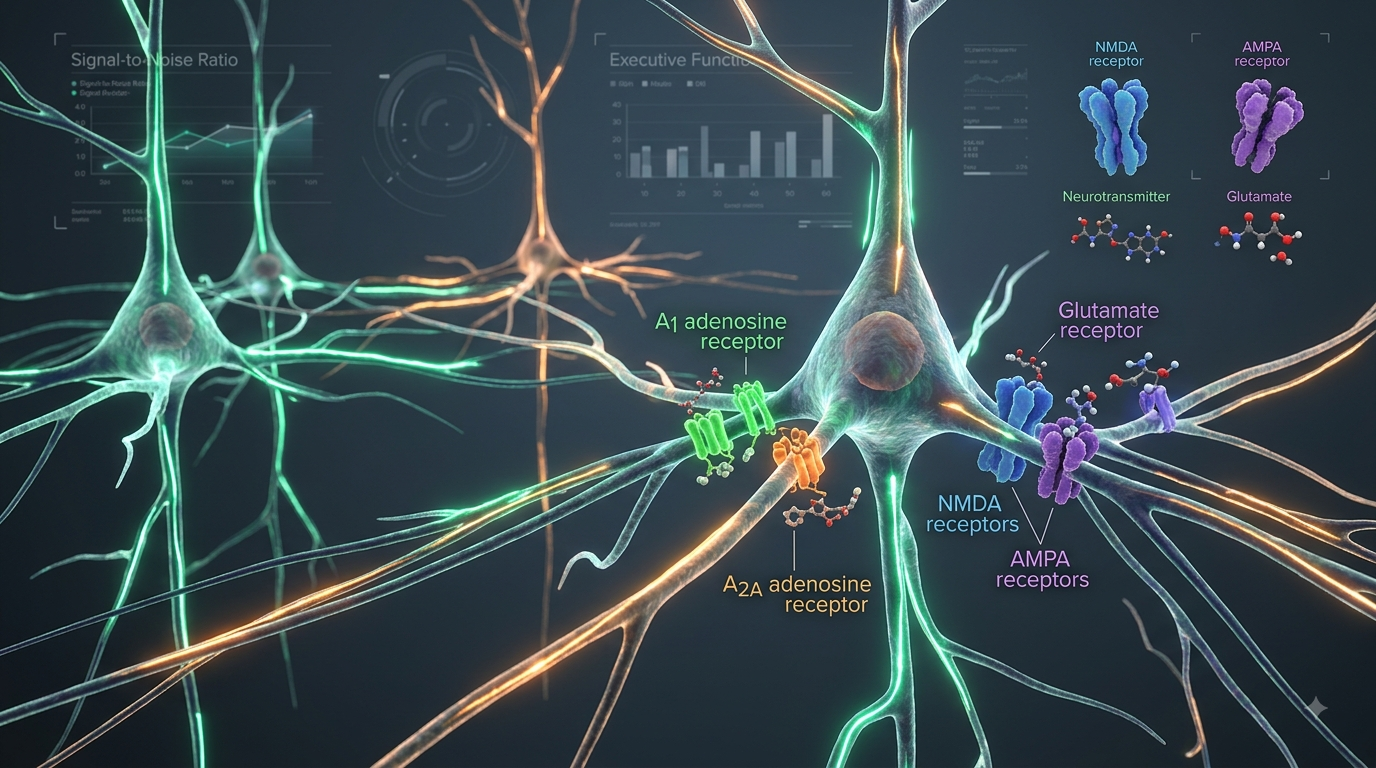
Executive function, working memory capacity, and cognitive flexibility depend directly on the structural efficiency of the prefrontal cortex (PFC). During prolonged high-demand cognitive tasks, continuous metabolic activity leads to local accumulation of adenosine and an imbalance in glutamatergic neurotransmission. This homeostatic sleep-pressure buildup degrades signal-to-noise ratios across cortical networks, resulting in mental fatigue, reduced impulse control, and compromised decision-making. Optimizing PFC performance requires fine-tuning excitatory inputs while preventing premature neuronal exhaustion.
1. Adenosine Dynamics and Cortical Signal-to-Noise Ratio
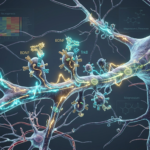
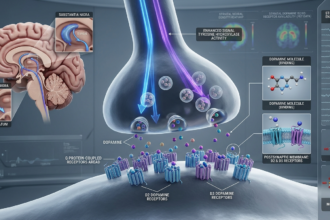
Adenosine accumulates as a byproduct of ATP breakdown in active PFC pyramidal neurons. By binding to inhibitory A1 and excitatory A2A adenosine receptors, it dampens presynaptic glutamate release to prevent metabolic neurotoxicity. However, when adenosine levels climb too high without adequate clearance, working memory circuits stall. Strategic modulation of adenosine receptors prevents premature central fatigue, preserving high-amplitude firing patterns required for deep analytical work.
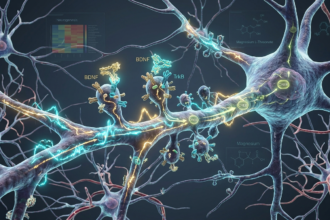
2. Cortical Firing State Analysis
High adenosine accumulation coupled with erratic glutamate surges leads to brain fog, low cognitive endurance, heightened distractibility, and poor working memory gatekeeping.
Targeted modulation creates crisp neuronal signal transmission, allowing sustained executive control, high cognitive flexibility, and resistance to mental fatigue.
3. Key Molecules for Prefrontal Cortex Tuning
4. Glymphatic Adenosine Clearance & Sleep Architecture
Pharmacological modulation of adenosine is a temporary strategy; the only physiological mechanism for clearing accumulated interstitial adenosine is deep slow-wave sleep (SWS). During SWS, the glymphatic system expands by up to 60%, allowing cerebrospinal fluid (CSF) to flush metabolic wastes from the cortical parenchyma. Ensuring high delta-wave power during sleep resets adenosine baseline levels, restoring full executive control for the subsequent wake cycle.
5. The Executive Function Protocol
Delay initial caffeine/stimulant intake by 90-120 minutes post-waking to allow natural cortisol awakening response (CAR) to clear residual morning adenosine without creating an artificial afternoon crash.
Combine targeted adenosine antagonists with glutamatergic stabilizers (L-Theanine + Citicoline) during high-workload blocks to preserve focus, stabilize executive decision-making, and protect against mental fatigue.
6. Global Wellness Lab Verdict
Prefrontal cortex dominance is maintained by balancing metabolic exertion with precise neurochemical intervention. Managing adenosine accumulation while supporting glutamatergic safety provides peak mental clarity, high cognitive endurance, and sustained executive command.
- Fisone, G., et al. (2004). “Adenosine A2A receptors in the brain: operation and clinical potential.” Trends in Pharmacological Sciences, 25(9), 470-476.
- Nathan, P. J., et al. (2006). “The neuropharmacology of L-theanine(N-ethyl-L-glutamine): a possible neuroprotective and cognitive enhancing agent.” Journal of Herbal Pharmacotherapy, 6(2), 21-30.
- Xie, L., et al. (2013). “Sleep drives metabolite clearance from the adult brain.” Science, 342(6156), 373-377.
- Silveri, M. M., et al. (2008). “Citicoline enhances frontal lobe bioenergetics as measured by phosphorus magnetic resonance spectroscopy.” NMR in Biomedicine, 21(10), 1066-1075.
- Arnsten, A. F. (2009). “Stress signalling pathways that impair prefrontal cortex structure and function.” Nature Reviews Neuroscience, 10(6), 410-422.
Global Wellness Lab
“Resilience is not the absence of stress, but the biological capacity to manage it without systemic degradation.”
Page Contents
Toggle