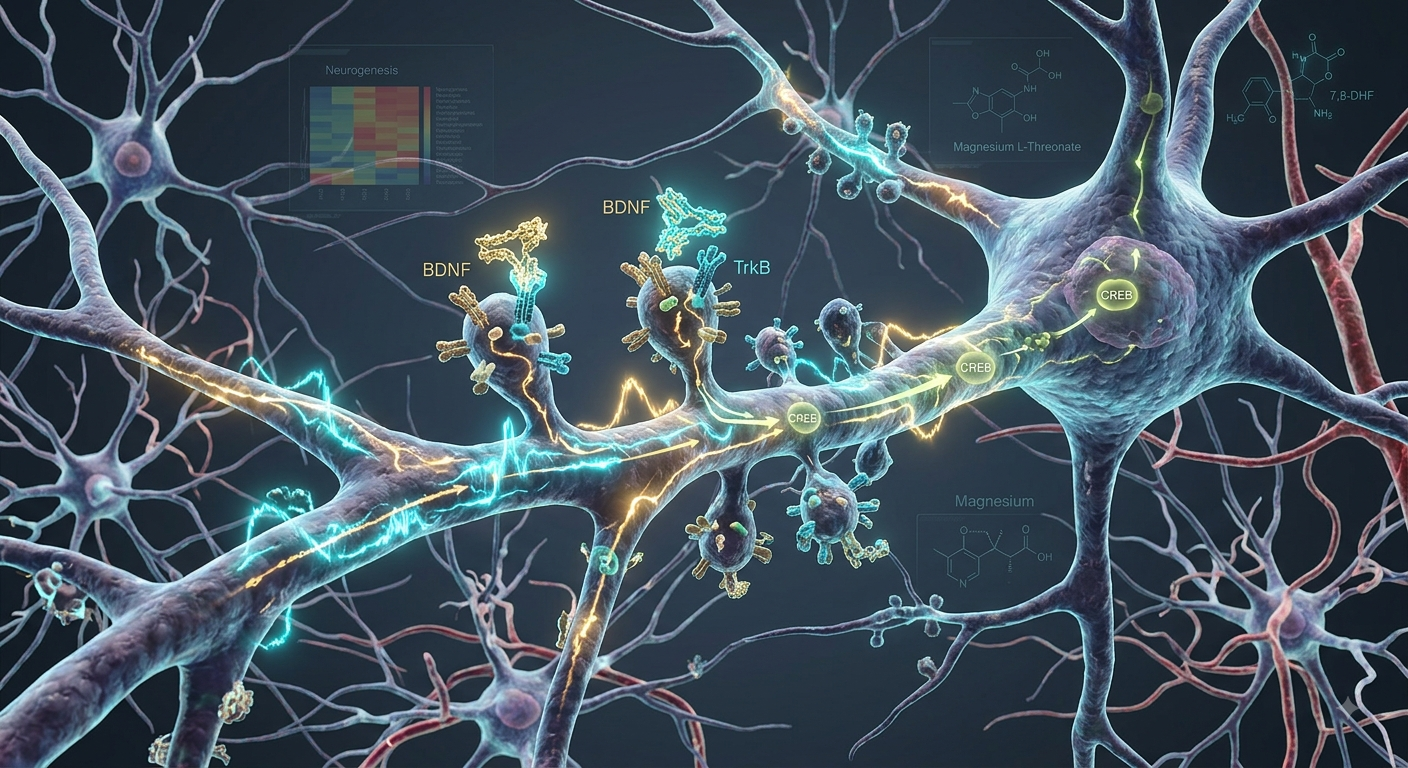
BDNF Activation & Neurogenesis: Molecular Protocols for Synaptic Plasticity
Long-term memory consolidation, cognitive agility, and emotional resilience are fundamentally governed by structural neuroplasticity. At the core of this system is Brain-Derived Neurotrophic Factor (BDNF), a key neurotrophin responsible for neuronal survival, dendritic branching, and adult hippocampal neurogenesis. Chronic psychological stress, elevated systemic inflammation, and metabolic dysfunction rapidly blunt BDNF gene expression. Restoring neurotrophic signaling requires targeted interventions that trigger the TrkB receptor cascade and activate downstream transcriptomic survival pathways.
1. The TrkB Receptor Cascade and CREB Phosphorylation
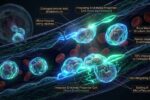
BDNF exerts its primary neuroprotective and neurogenic effects by binding to Tropomyosin receptor kinase B (TrkB). This binding event triggers receptor dimerization and autophosphorylation, initiating intracellular signaling pathways including MAPK/ERK and PI3K/Akt. These cascades culminate in the activation of CREB (cAMP response element-binding protein), a transcription factor that upregulates genes necessary for dendritic spine morphogenesis, LTP (long-term potentiation), and structural synaptogenesis.
2. Neurotrophic State Analysis
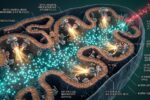
Elevated cortisol and proinflammatory cytokines suppress BDNF transcription. This manifests as dendritic atrophy in the hippocampus, severe cognitive inflexibility, reduced learning capacity, and accelerated brain aging.
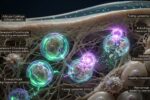
Continuous CREB phosphorylation fosters new neural progenitor cell differentiation in the dentate gyrus. Results in rapid skill acquisition, structural stress resilience, and heightened synaptic plasticity.
3. Key Molecules for BDNF Upregulation
4. Physical & Metabolic Drivers of BDNF Synthesis
Exogenous compounds must be supported by systemic metabolic drivers to achieve maximal neurogenic rates. High-Intensity Interval Training (HIIT) releases skeletal muscle-derived lactate, which crosses the blood-brain barrier and stimulates BDNF promoter IV activity via SIRT1/PGC-1α signaling pathways. Concurrently, intermittent energetic challenges produce beta-hydroxybutyrate (BHB), a ketone body that acts as an endogenous HDAC inhibitor, directly unlocking the BDNF gene locus for transcription.
5. The Neuroplasticity Activation Protocol
Perform brief, intense aerobic exercise sessions coupled with overnight time-restricted feeding. This dual metabolic stimulus elevates systemic BHB and lactate, creating an optimal epigenetic environment for BDNF gene uncoiling.
Introduce targeted bioactives (such as 7,8-DHF and highly bioavailable magnesium forms) during high cognitive demands to reinforce newly formed dendritic connections and accelerate long-term potentiation.
6. Global Wellness Lab Verdict
Adult neurogenesis is not a fixed biological constant, but an actively modifiable state. By leveraging exercise-induced metabolic drivers alongside targeted small-molecule TrkB agonists, you can systematically optimize BDNF signaling—unlocking superior learning rates, cognitive adaptability, and permanent neuro-structural resilience.
- Lu, B., et al. (2013). “BDNF and synaptic plasticity, cognitive function, and dysfunction.” Handb Exp Pharmacol, 220, 223-250.
- Jang, S. W., et al. (2010). “Identification of 7,8-dihydroxyflavone as a small-molecule TrkB agonist using high-throughput screening.” Proc Natl Acad Sci U S A, 107(6), 2687-2692.
- Slutsky, I., et al. (2010). “Enhancement of learning and memory by elevating brain magnesium.” Neuron, 65(2), 165-177.
- Sleiman, S. F., et al. (2016). “Exercise promotes the expression of BDNF through the action of the ketone body β-hydroxybutyrate.” eLife, 5, e15092.
- Lai, K. O., et al. (2012). “Structural biology of BDNF/TrkB signaling and its implications for neuroprotective therapies.” Neuropharmacology, 62(1), 67-75.
Global Wellness Lab
“Resilience is not the absence of stress, but the biological capacity to manage it without systemic degradation.”
Page Contents
Toggle