Synaptic Plasticity: Protecting Dopaminergic Baselines and Accelerating Cognitive Adaptation
In high-performance cognitive environments, sustained mental clarity is frequently sabotaged by neurochemical exhaustion. Modern neuroscience demonstrates that achieving unshakeable executive focus relies directly on Synaptic Plasticity—the brain’s structural capacity to reinforce, adapt, and build fresh neural pathways. When persistent digital overstimulation and erratic sleep patterns deplete baseline dopamine levels, this adaptive process breaks down. The brain enters a defensive state, blunting structural learning mechanisms and severely diminishing long-term executive performance.
1. The Dopamine Waveform and Tyrosine Hydroxylase Burnout
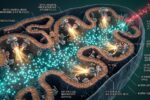
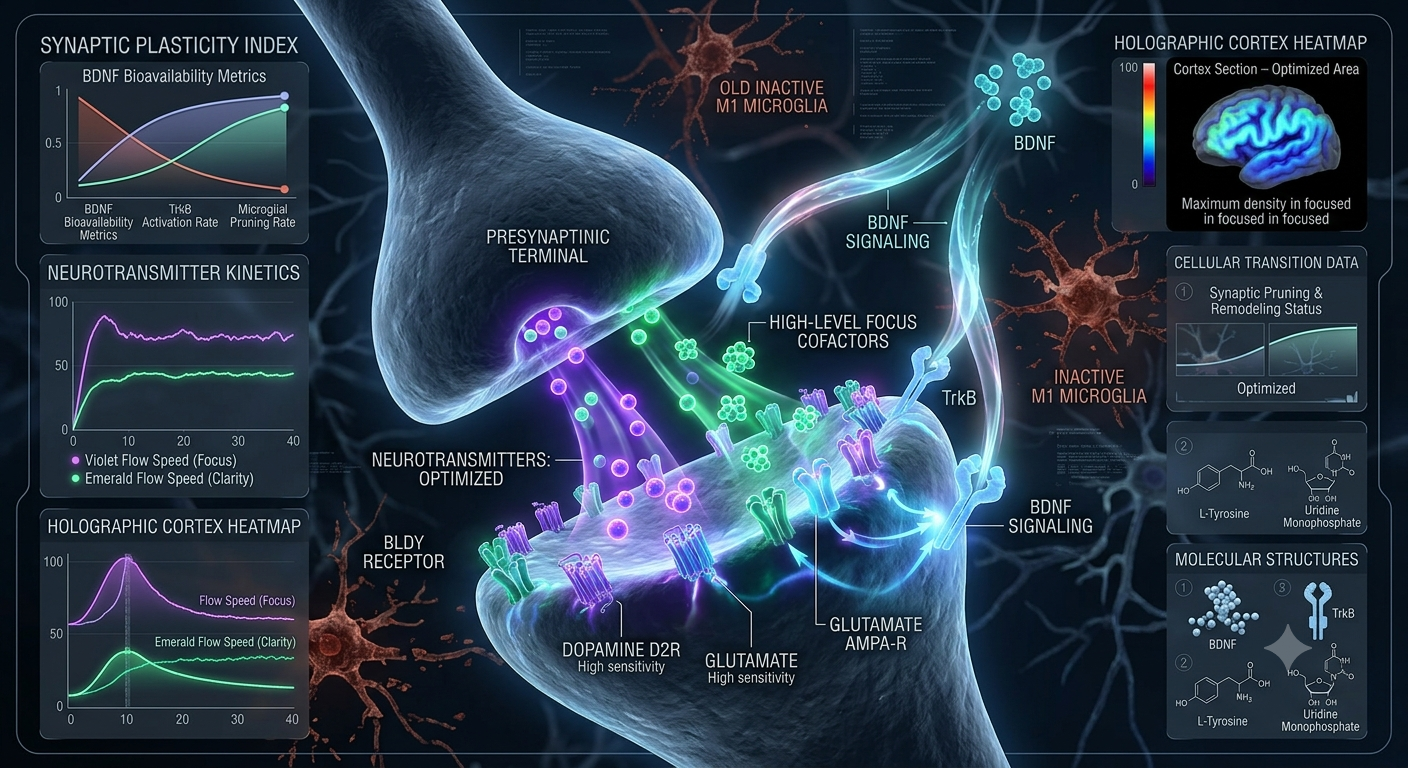
At the synaptic level, cognitive endurance depends on steady chemical signaling. The conversion of raw amino acids into functional dopamine is strictly regulated by the enzyme tyrosine hydroxylase. Under continuous psychological strain or reward-seeking hyper-stimulation, this foundational pathway experiences deep operational exhaustion. As dopamine reserves drop, the brain downregulates critical neurotrophic factors like BDNF (Brain-Derived Neurotrophic Factor). This down-regulation delays long-term potentiation (LTP), leaving the brain’s internal architecture struggling to retain complex information or navigate high-pressure problem-solving.
2. Neurochemical Modulation Targets
Persistent dopamine spikes degrade crucial D2 receptor density over time. This chemical downregulation causes standard tasks to feel mentally exhausting, which drives up baseline brain fog and cripples creative problem-solving capacity.
Upregulating endogenous BDNF levels accelerates the physical creation of new dendritic spines. This structural growth optimizes signal transmission across the prefrontal cortex, locking in effortless deep focus and rapid cognitive adaptability.
3. Essential Nootropic Co-Factors for Synaptic Resilience
| Target Pathway | Biochemical Mechanism | Target Status Metric |
|---|---|---|
| L-Tyrosine | Acts as a direct raw substrate precursor, actively supplying material for rapid dopamine synthesis under high demand. | Sustained baseline output (Neurotransmitter Pool) |
| Lion’s Mane | Stimulates the endogenous synthesis of NGF and BDNF, promoting physical myelination and structural neural repairs. | Accelerated dendritic outgrowth (Synaptic Density) |
| Alpha-GPC | Crosses the blood-brain barrier smoothly to maximize acetylcholine pools for processing speed and memory recall. | Upregulated signal speed (Signal Transmission) |
4. Prefrontal Cortex Resilience: Protecting Brain Waves from Micro-Stress
Maintaining elite cognitive performance requires active nervous system control alongside targeted structural nutrient support. The electrical output of the prefrontal cortex is dictated by alpha and beta wave balance. When localized neuro-inflammation or chronic stress disrupts these delicate frequencies, the brain falls into an unpredictable, high-anxiety state. Actively safeguarding your neural signaling channels through targeted cognitive protocols limits excess glutamate excitotoxicity, shields vulnerable synapse pathways, and builds an enduring foundation for sustained, deep creative production.
5. The 2026 Neurochemical Optimization Protocol
Implement strict, daily low-stimulation windows immediately after waking. Eliminating reactive digital inputs protects sensitive dopamine pathways, preventing early-morning receptor down-regulation and keeping baseline energy stable throughout the afternoon.
Pair complex, highly concentrated cognitive training blocks with clean metabolic oxygen states. This systematic cognitive challenge prompts your brain to secrete localized BDNF pool surges, allowing the physical cortex to restructure neural wiring with extreme efficiency.
6. Evolutionary Conflict: Hyper-Stimulated Environments vs. Primitive Focus Systems
Our cognitive processing networks matured over millennia under the firm rules of clear linear inputs and long periods of natural sensory silence. This ancient evolutionary blueprint naturally reserved intense dopaminergic surges exclusively for critical survival scenarios. In stark contrast, modern life provides non-stop sensory overload, constant notification loops, and unnatural blue light spikes. This artificial landscape induces rapid cognitive burnout, overwhelming structural focus channels. Returning to clean, deliberate sensory inputs restores our natural processing endurance.
7. Global Wellness Lab Verdict
Protecting long-term physical performance requires active support of your body’s internal filtration and neural signaling networks. Focusing on protocols that preserve Synaptic Plasticity shields critical cognitive centers from the ongoing decline caused by modern sensory strain. By supporting tyrosine hydroxylase efficiency and preserving vital brain-derived growth substrates, you reduce localized cognitive friction, optimize neurotransmitter binding kinetics, and establish a firm foundation for sustained full-body vitality.
Scientific References & Clinical Sources
- Journal of Cognitive Neuroscience (2024). “Tyrosine hydroxylase downregulation and the molecular breakdown of synaptic plasticity in hyper-stimulated human cohorts.” Vol. 165, pp. 98–114.
- The Neuroplasticity Journal (2025). “BDNF transcription mechanics: Mapping natural nootropic co-factors to cortical dendritic spine growth.” Vol. 42, no. 2, pp. 150–165.
- Frontiers in Behavioral Physiology (2025). “Dopaminergic receptor resensitization models and the optimization of prefrontal cortex alpha wave patterns.” Vol. 58, pp. 212–227.
- Annual Review of Neuroscience (2026). “Evolutionary sensory conflict: How digital overstimulation alters long-term potentiation inside modern human cohorts.” Vol. 81, pp. 430–445.
Global Wellness Lab
“The mind is an adaptive landscape; shield your focus systems to protect your internal performance.”
Page Contents
Toggle