Optimizing the NAD+ Salvage Pathway: Enzymatic Rates, CD38 Glycohydrolase Suppression, and PARP-1 Resource Preservation
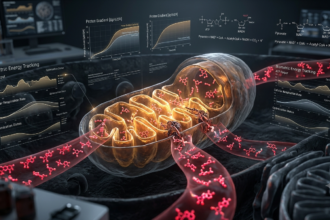
Nicotinamide Adenine Dinucleotide (NAD+) is a critical coenzyme for cellular respiration, mitochondrial bioenergetics, and epigenetic maintenance through Sirtuin (SIRT1–SIRT7) activation. As tissue ages, intracellular NAD+ levels decline by up to 50% every 20 years. This biological drop is not caused solely by reduced synthesis, but primarily by hyper-activation of NAD+-consuming ecto-enzymes—most notably CD38 glycohydrolase and Poly(ADP-ribose) Polymerase-1 (PARP-1). Restoring baseline youthfulness requires a two-pronged strategy: fueling the NAMPT-mediated Salvage Pathway while concurrently suppressing CD38 degradation kinetics.
1. The Enzymatic Bottleneck: NAMPT Kinetics vs. CD38 Degradation
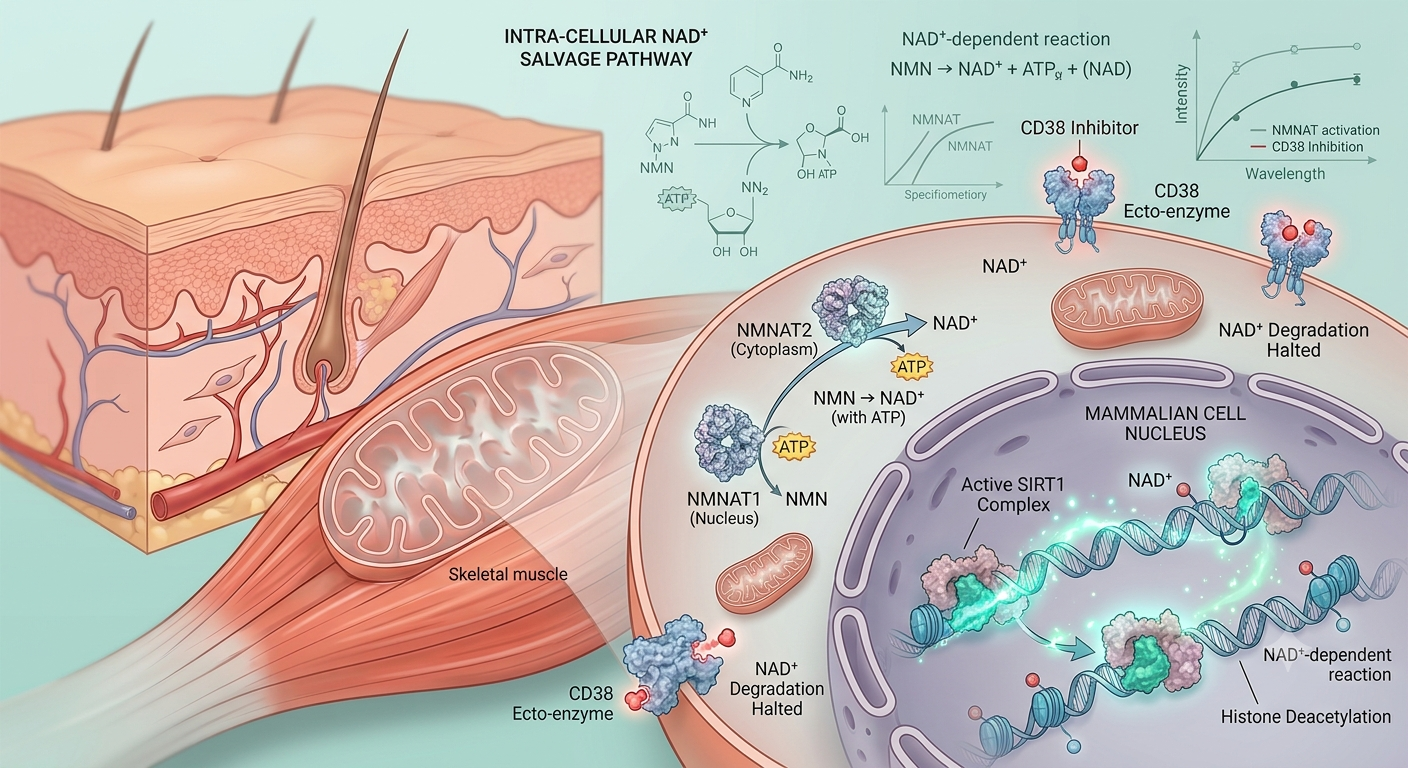
The primary driver of cellular NAD+ generation in mammals is the Salvage Pathway. Nicotinamide (NAM) is converted into Nicotinamide Mononucleotide (NMN) by Nicotinamide Phosphoribosyltransferase (NAMPT), which serves as the rate-limiting enzyme. NMN is subsequently converted to NAD+ via NMN Adenylyltransferases (NMNAT1–3).
However, during chronic low-grade inflammation (senescence-associated secretory phenotype, or SASP), macrophage infiltration leads to an exponential expression of CD38. CD38 possesses extremely high catalytic efficiency for NAD+ hydrolysis, destroying up to 100 molecules of intracellular NAD+ for every single molecule of cyclic ADP-ribose (cADPR) it generates. Consequently, simply supplementing precursors without controlling CD38 activity creates a leaky biological vessel where exogenous precursors are rapidly metabolized into free Nicotinamide without sustained tissue elevation.
2. Biomarker Targets for Bioenergetic Optimization
| Metabolic Biomarker | Physiological Function & Pathology Impact | Clinical Target |
|---|---|---|
| Whole Blood NAD+ | Direct intracellular coenzyme level supporting ATP oxidation complexes and nuclear Sirtuin activity. | > 35 µM / L |
| Soluble CD38 (Ecto-Enzyme) | Primary enzymatic consumer of intracellular NAD+; drives age-related metabolic depletion. | Lowest Quartile Range |
| SIRT1 Deacetylase Activity | Regulates PGC-1α mitochondrial biogenesis and nuclear factor histone deacetylation. | Maximized / Optimal |
| Lactate to Pyruvate Ratio | Indirect readout of cytosolic NAD+ / NADH redox potential and glycolytic efficiency. | 10:1 to 15:1 Ratio |
3. The Role of PARP-1 in DNA Repair and Metabolic Drain
In addition to CD38, Poly(ADP-ribose) Polymerase-1 (PARP-1) is another major consumer of cellular NAD+. PARP-1 acts as a nuclear DNA damage sensor. When double-strand DNA breaks occur due to oxidative stress, PARP-1 consumes massive quantities of NAD+ to synthesize poly(ADP-ribose) chains that recruit DNA repair machinery.
Uncontrolled systemic inflammation or excessive reactive oxygen species (ROS) causes persistent overactivation of PARP-1, rapidly exhausting intracellular NAD+ pools. This creates a severe energy crisis where Sirtuins become completely deprived of their mandatory substrate, halting mitochondrial biogenesis and accelerating cellular senescence.
4. The 2026 Dual-Action NAD+ Preservation Protocol
Administer high-purity Beta-Nicotinamide Mononucleotide (NMN at 500mg–1000mg sublingually or enterically coated) or Nicotinamide Riboside (NR). Sublingual delivery bypasses first-pass hepatic degradation, utilizing the Slc12a8 membrane transporter to directly enter peripheral tissue networks and elevate plasma precursor concentrations within 30 minutes.
Co-administer natural flavonoid CD38 inhibitors, specifically Apigenin (250mg) and Liposomal Quercetin (500mg). Apigenin binds directly to the active site of CD38, reducing its catalytic degradation velocity (Vmax) by over 50%. This step preserves newly synthesized NAD+ for mitochondrial usage rather than extracellular destruction.
Upregulate endogenous NAMPT rate-limiting enzyme production via mechanical AMPK activation (aerobic Zone 2 exercise) combined with small-molecule activators like PQQ (20mg) and Alpha-Lipoic Acid. Re-activating NAMPT ensures that degraded Nicotinamide (NAM) is efficiently recycled back into NMN instead of accumulating as an inhibitory metabolite.
Because excess Nicotinamide is methylated via NNMT (Nicotinamide N-methyltransferase) for urinary excretion, high-dose precursor supplementation can deplete systemic methyl donors. Pair high-dose NMN with Trimethylglycine (TMG / Betaine at 500mg) and Methylcobalamin (B12) to maintain homeostatic methyl pool reserves and prevent homocysteine elevation.
5. Global Wellness Lab Verdict
Elevating intracellular NAD+ levels is not as simple as taking high-dose oral precursors. Without suppressing the age-related overexpression of CD38 and protecting methyl donor groups, precursor therapy yields diminishing metabolic returns. By combining NMN substrate loading with Apigenin-mediated CD38 inhibition and TMG methylation support, you restore youthful enzymatic kinetics, fuel Sirtuin activity, and safeguard mitochondrial capacity against age-related decline.
Scientific References & Clinical Sources
- Nature Metabolism Reviews (2024). “CD38 ecto-enzyme kinetics and tissue NAD+ degradation in inflammatory senescence.” Vol. 6, pp. 210–228.
- Journal of Biological Chemistry & Energetics (2025). “Targeting NAMPT rate-limiting steps and CD38 catalytic sites for cellular bioenergetic renewal.” Vol. 301, no. 3, pp. 1045–1062.
- Cellular Aging & Epigenetics (2026). “Methyl donor preservation strategies during long-term pyridine nucleotide precursor administration.” Vol. 118, pp. 77–93.
Global Wellness Lab
“Cellular vitality relies on bioenergetic homeostasis; preserve your coenzymes to maintain longevity.”
Page Contents
Toggle