Dopamine Receptor D2 Upregulation: Kinetic Protocols & Neuro-Aesthetic Tuning
Sustained cognitive drive, deep execution state, and mental clarity rely heavily on the structural density and sensitivity of striatal dopamine receptors. Chronic overstimulation, hyper-palatable digital inputs, and erratic sleep schedules lead to severe down-regulation of D2 and D3 receptors. This neurochemical adaptation causes baseline dopamine signals to fall flat, manifesting as dynamic anhedonia, brain fog, and executive dysfunction. Restoring peak neuronal tone requires precise kinetic protocols designed to upregulate postsynaptic receptor density while stabilizing baseline firing rates.
1. Tonic vs. Phasic Dopamine Firing Dynamics
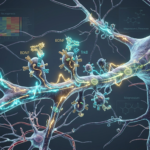
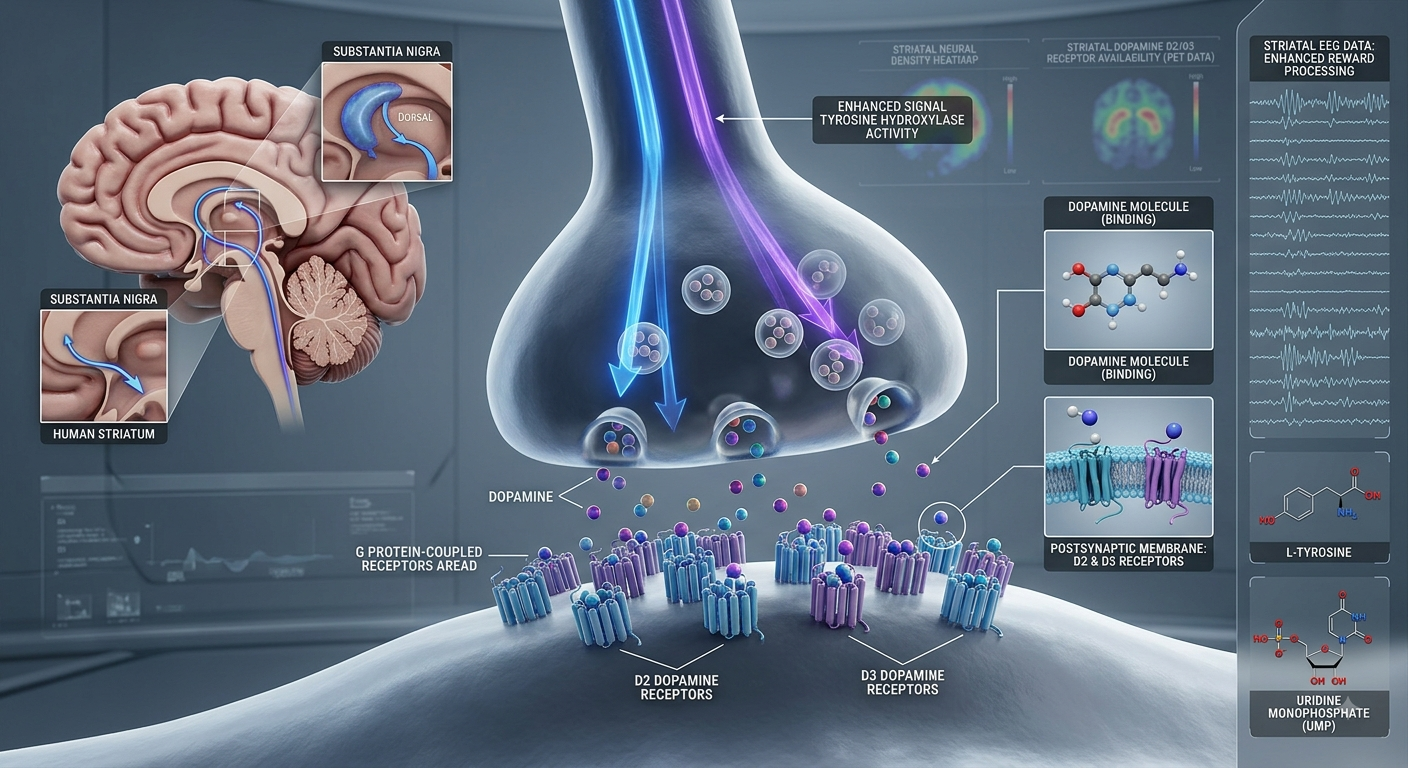
Dopaminergic signaling in the ventral and dorsal striatum operates via two primary mechanisms: low-frequency baseline release (tonic firing) and rapid stimulus-driven bursts (phasic firing). When phasic spikes occur too frequently due to continuous artificial stimulation, the brain downregulates D2 receptor availability to protect the post-synaptic neuron from neurotoxicity. Upregulating D2 receptor density restores sensitivity, allowing lower baseline levels of dopamine to trigger strong, sustained focus and effortless drive without requiring constant external novelty.
2. Receptor Density State Analysis
Continuous overstimulation leads to a drop in postsynaptic D2 receptors. Natural tasks feel unrewarding, task initiation becomes exceptionally difficult, and working memory efficiency degrades rapidly under fatigue.
A dense D2 receptor network efficiently captures baseline dopamine (tonic signal). This translates into friction-free task execution, elevated intrinsic motivation, and stable emotional self-regulation.
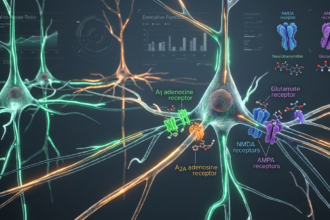
3. Target Molecules for Dopaminergic Sensitization
4. Tyrosine Hydroxylase Optimization and Synthesis
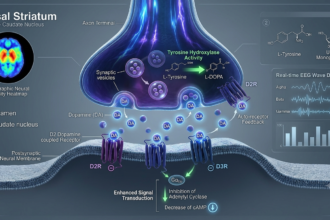
Receptor density is only half of the neuro-chemical equation; precursor availability determines actual synthesis rate. Tyrosine Hydroxylase (TH) serves as the rate-limiting enzyme converting L-Tyrosine to L-DOPA. TH activity can be blunted by oxidative stress and chronic neuroinflammation. Supporting cofactor production (including iron, tetrahydrobiopterin, and active B-vitamins) ensures that newly upregulated receptors receive optimal neurotransmitter binding without inducing enzyme depletion.
5. The D2 Receptor Reset & Tuning Protocol
Systematically strip away hyper-rewarding artificial inputs for a minimum of 14 continuous days. By limiting high-frequency dopamine bursts, postsynaptic neurons drop their defensive downregulation, triggering natural synthesis of fresh D2 receptors to maintain homeostatic signaling.
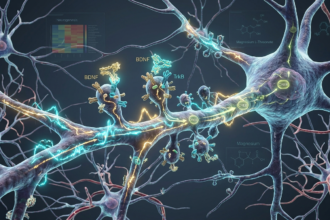
Introduce membrane substrates (Uridine Monophosphate combined with Docosahexaenoic Acid – DHA) to provide raw materials for dendritic spine expansion and new synaptic receptor insertion across striatal pathways.
6. Global Wellness Lab Verdict
Long-term executive performance is built on neuro-chemical sensitivity, not constant stimulation. By removing artificial stimulation spikes and implementing targeted molecular support for membrane repair, you restore dopamine receptor density—unlocking effortless concentration, steady cognitive energy, and long-term neuroplastic resilience.
- Volkow, N. D., et al. (2010). “Decreased striatal dopamine D2/D3 receptors in obese individuals: implication for severe obesity.” The Journal of Neuroscience, 30(24), 8101-8105.
- Wang, G. J., et al. (2004). “Brain dopamine and obesity.” The Lancet, 357(9253), 354-357.
- Wurtman, R. J., et al. (2006). “Synaptic proteins and phospholipids that are increased in brain by administering uridine plus docosahexaenoic acid.” Brain Research, 1088(1), 83-92.
- Bizot, J. C., et al. (2005). “Chronic administration of sulbutiamine improves memory in mice: involvement of cholinergic, dopaminergic and glutamatergic systems.” Progress in Neuro-Psychopharmacology & Biological Psychiatry, 29(6), 928-935.
- Daubner, S. C., et al. (2011). “Tyrosine hydroxylase and regulation of dopamine synthesis.” Archives of Biochemistry and Biophysics, 508(1), 1-12.
Global Wellness Lab
“Resilience is not the absence of stress, but the biological capacity to manage it without systemic degradation.”
Page Contents
Toggle