
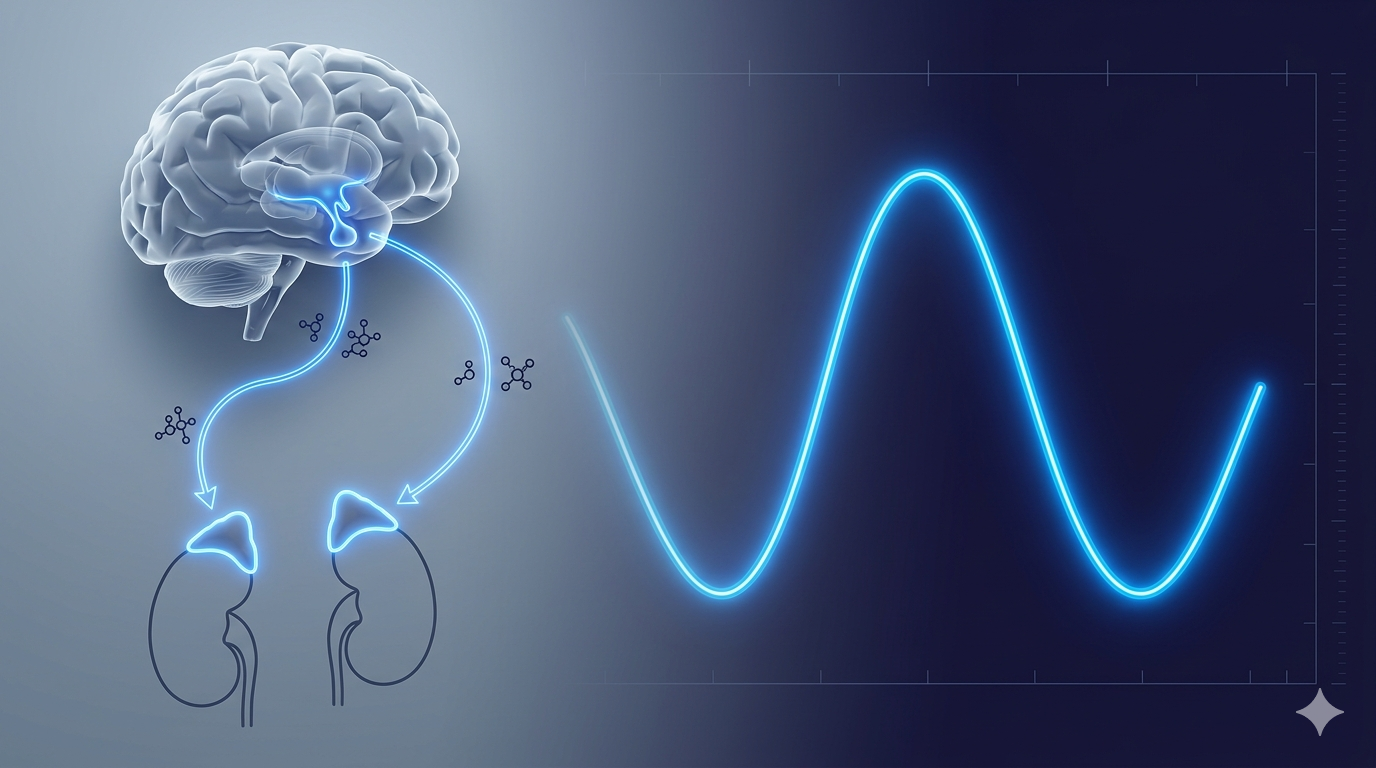
Neuroendocrine Pacing & Cortisol Dynamics: The Bioenergetics of HPA-Axis Resilience
In the hierarchy of systemic homeostasis, the Hypothalamic-Pituitary-Adrenal (HPA) axis functions as the primary neuroendocrine thermostat. Cortisol—a vital glucocorticoid synthesized by the adrenal cortex—is not merely a “stress hormone”; it is a foundational metabolic coordinator that governs immune response, vascular tone, and circadian pacing. When environmental or physiological friction causes chronic disruptions in cortisol dynamics, the entire energetic baseline of the organism is compromised. This technical analysis explores the biochemistry of HPA-axis pacing and strategies for restoring endocrine resilience.
The Mechanics of the Diurnal Cortisol Slope
Under optimal conditions, cortisol production follows a strict 24-hour wave dictated by the master circadian clock in the hypothalamus (the suprachiasmatic nucleus). This curve is characterized by:
- The Cortisol Awakening Response (CAR): A sharp 50% to 75% surge within 30 to 45 minutes of waking, clearing neural pathways and initiating metabolic state transformations.
- The Diurnal Decline: A steady, progressive drop throughout the afternoon, allowing for efficient nutrient assimilation and tissue upkeep.
- The Nocturnal Trough: Reaching its absolute nadir around midnight, creating a molecular environment optimized for systemic cellular repairs.
Circadian Synchronization Note: A flattened cortisol curve or an elevated nocturnal trough directly disrupts the secretion of growth hormone and melatonin. To understand how neuroendocrine timing dictates night-time cellular repair, review our comprehensive study on Sleep Architecture & Hormonal Recovery.
The Cellular Toll of Chronic Hypercortisolemia
When systemic stressors remain unmitigated, persistent HPA-axis overactivation alters the glucocorticoid receptor (GR) sensitivity across tissues. This state triggers severe down-stream biochemical friction:
Intracellular Bioenergetics Breakdown: Chronic neuroendocrine stress directly compromises the electron transport chain, reducing net cellular currency production. For a deep biochemical drill-down into preserving this mitochondrial integrity under load, cross-reference this with Mitochondrial Resilience & ATP Production.
Clinical Protocols for Endocrine Pacing
Re-establishing a high-amplitude cortisol curve requires targeted, multi-phase biological interventions designed to reinforce negative feedback sensitivity within the brain:
Exposing retinal neural structures to high-lux natural sunlight within 30 minutes of waking forces the suprachiasmatic nucleus to anchor the morning Cortisol Awakening Response (CAR), automatically setting up an optimal midnight drop.
Introducing highly standard adaptogens, such as KSM-66 Ashwagandha or Rhodiola Rosea, helps modulate the sensitivity of central glucocorticoid receptors, buffering cell structures from adrenaline spikes.
Severe glucose drops trigger emergency secondary cortisol release to mobilize liver glycogen stores. Keeping dietary macronutrient lines consistent stops these erratic micro-stress responses.
Global Wellness Lab Verdict
HPA-axis resilience cannot be achieved through isolating single organ symptoms. Endocrine pacing requires consistent, dedicated environmental signals—including light calibration, metabolic precision, and adaptogenic safety parameters. By protecting the natural amplitude of the diurnal cortisol slope, you guard systemic physical stamina against cellular exhaustion, cementing long-term physiological confidence.
Global Wellness Lab
“Maximize cellular energy and tissue safety to build absolute physiological endurance.”
Page Contents
Toggle