Category: Metabolic Health
Vascular Biology | Technical Level: Advanced | Read Time: 12 min
The human vascular system is not a set of static pipes, but a dynamic, elastic network. In 2026, the primary biomarker for biological aging has shifted from simple blood pressure readings to Arterial Stiffness. When large arteries lose their compliance, the high-pressure “pulse wave” from the heart is no longer buffered, reaching the delicate microvasculature of the brain with damaging force.
1. The Windkessel Effect: Nature’s Shock Absorber
Healthy arteries utilize the Windkessel Effect—the ability of the aorta and large vessels to expand during systole (heart contraction) and recoil during diastole. This elastic recoil ensures a continuous, steady flow of blood even when the heart is resting between beats.
The Technical Consequence: As arteries stiffen due to calcification or cross-linking, this buffering capacity vanishes. The result is increased systolic pressure and decreased diastolic perfusion, starving the brain of consistent oxygen delivery.
2. New Layout Block: The Endothelial Nitric Oxide (eNO) Circuit
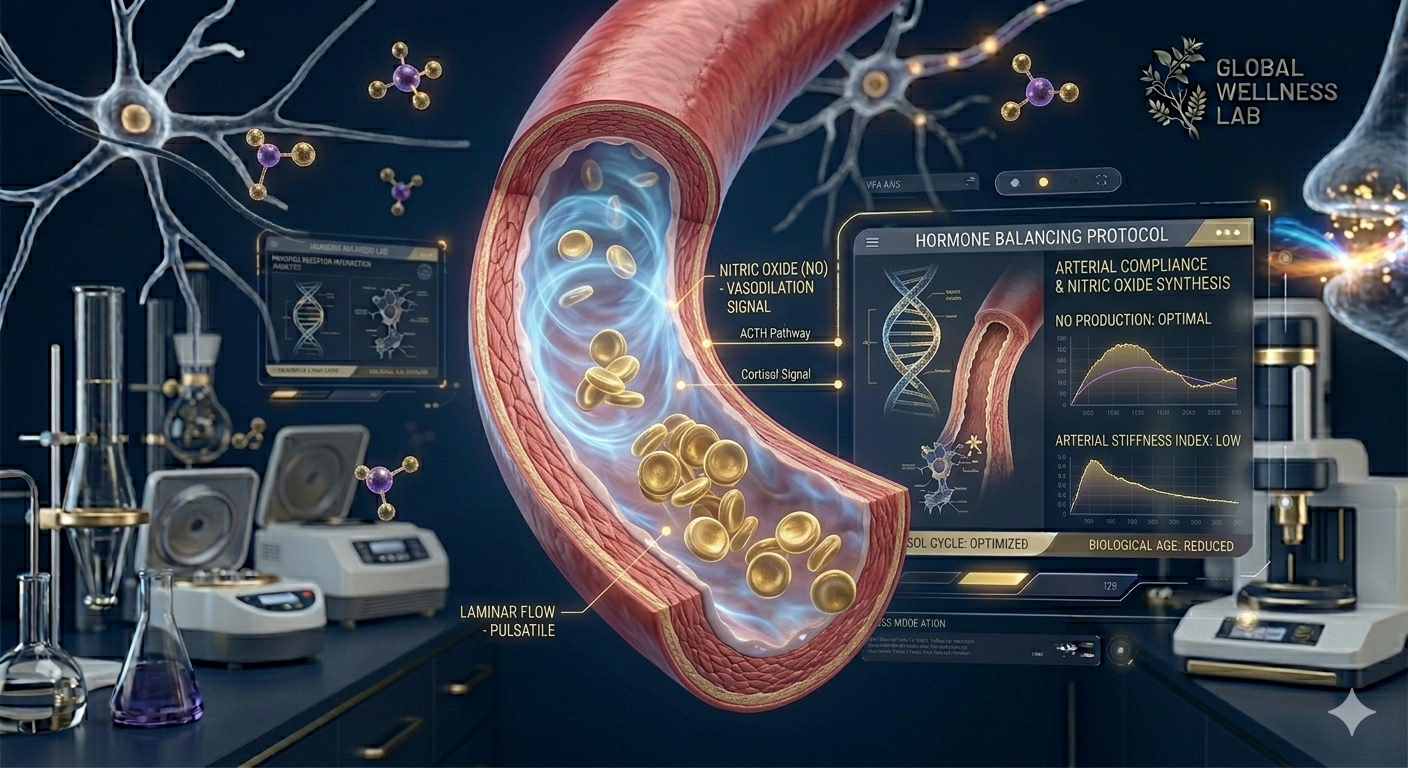
The endothelium—a single layer of cells lining your vessels—acts as the “brain” of the artery. Its primary tool for maintaining elasticity is Nitric Oxide (NO):
- Vasodilation: NO signals the smooth muscle cells to relax, increasing the vessel’s diameter and reducing resistance.
- Anti-Aggregation: It prevents platelets from sticking to the arterial walls, maintaining a smooth surface for laminar blood flow.
- Shear Stress Response: Physical movement triggers mechanoreceptors in the endothelium to produce more NO, effectively “training” the vessels to remain flexible.
3. Technical Comparison: Markers of Vascular Compliance
| Marker | Physiological Significance | 2026 Optimization Target | Intervention |
|---|---|---|---|
| PWV (Pulse Wave Velocity) | Speed of pressure wave travel | < 7 m/s | Interval Aerobic Training |
| Aix (Augmentation Index) | Measure of wave reflection | < 10% | Magnesium & K2 Protocol |
| FMD (Flow-Mediated Dilation) | Endothelial responsiveness | > 7% | Nitrate-Rich Nutrition |
| Arterial Calcification | Structural mineral density | Zero Progression | Vitamin K2 (MK-7) |
4. New Layout Block: The 2026 Vascular Integrity Protocol
To maintain “youthful” arterial compliance and protect cerebrovascular integrity, we implement this engineering checklist:
- Nitrate Loading: Incorporating high-nitrate botanicals (Arugula, Beetroot) to provide the inorganic substrate for the nitrate-nitrite-NO pathway, bypassing impaired eNOS activity.
- Matrix Gla Protein (MGP) Activation: Ensuring a daily intake of Vitamin K2 (MK-7) to activate MGP, the most powerful inhibitor of soft tissue calcification currently known.
- Glycation Defense: Limiting fructose and high-glucose spikes to prevent the formation of Advanced Glycation End-products (AGEs), which chemically “cross-link” collagen fibers, making arteries rigid.
5. Global Wellness Lab Verdict
Your biological age is the age of your arteries. By prioritizing endothelial health and maintaining the elastic properties of the vascular tree, you ensure that every organ—especially the brain—receives a steady, buffered supply of life-sustaining blood. As emphasized in our Editorial Policy, vascular health is the cornerstone of metabolic and cognitive longevity.
6. Legal Disclaimer
This is a technical educational analysis and does not substitute professional medical advice. Individuals with diagnosed hypertension or cardiovascular disease should consult their cardiologist before initiating new supplement or exercise protocols.