Reversing Insulin Resistance: The Bioenergetic Pathway to Metabolic Flexibility
Metabolic dysfunction is rarely a sudden physiological failure; rather, it is a gradual decline in cellular bioenergetics. At the core of this decline is the loss of metabolic flexibility—the body’s native capacity to seamlessly alternate between carbohydrate and lipid oxidation based on substrate availability.
When skeletal muscle and hepatic tissues become structurally oversaturated with chronic energy inputs, insulin receptors undergo severe desensitization. Reversing this cascade requires more than superficial caloric restriction; it demands a targeted biochemical recalibration of the mitochondria.
The Molecular Mechanism of Insulin Receptor Desensitization
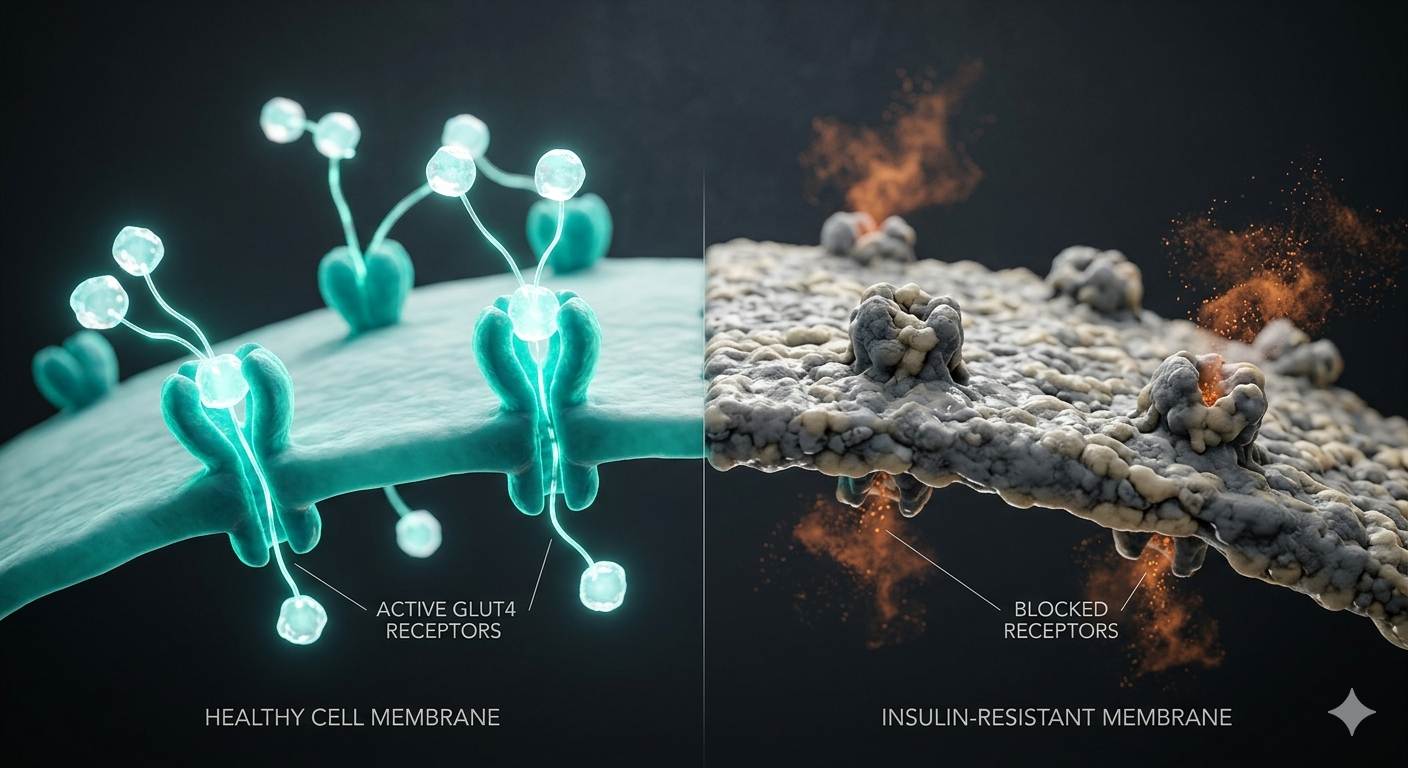
Under normal physiological conditions, the binding of insulin to its extracellular receptor initiates a phosphorylation cascade, mobilizing glucose transporter proteins (GLUT4) to the cell membrane. This mechanism allows blood glucose to enter the cell smoothly, maintaining homeostatic balance.
However, systemic over-nutrition leads to an intracellular accumulation of lipid metabolites, known as diacylglycerols and ceramides. These compounds activate protein kinase C (PKC), which disrupts the insulin receptor substrate pathways. The cell effectively locks its doors from the inside, forcing the pancreas to overproduce insulin, triggering compensatory hyperinsulinemia.
Triggers for Cellular Recalibration: AMPK and Mitochondrial Biogenesis
To reverse this cycle and restore insulin sensitivity, the intracellular energy sensor known as AMP-activated protein kinase (AMPK) must be systematically up-regulated. When AMPK is active, it stimulates key metabolic repair pathways:
AMPK activation bypasses defective insulin signaling entirely, forcing GLUT4 transporters to the cell surface to clear glucose during physical exertion.
Signals the nucleus to synthesize new mitochondria, expanding the cellular infrastructure required to oxidize accumulated intracellular fats cleanly.
Initiates the systematic degradation of damaged proteins and dysfunctional mitochondrial fragments, reducing local cellular oxidative stress.
Clinical Interventions for Restoring Glucose Homeostasis
Restoring metabolic flexibility requires a structured biochemical protocol designed to deplete glycogen reserves and downregulate basal insulin expression:
Extended digestive rest periods (16 to 18 hours) reduce systemic glucose availability, forcing hepatic tissue to release stored glycogen and allowing fatty acid oxidation pathways to activate natively.
Utilizing advanced nutritional biochemistry complexes—featuring pure plant extracts like berberine HCl and banaba leaf—helps regulate glucose absorption kinetics and directly increases the phosphorylation rate of insulin receptors.
Biochemical Assessment
True progress in metabolic health is verified through specific physiological markers. Monitoring a sustained reduction in fasting insulin levels, alongside improvements in HbA1c and triglyceride-to-HDL ratios, provides accurate insight into the restoration of cellular lipid clearance and overall tissue sensitivity.
Conclusion: Reclaiming Autochthonous Cellular Control
Insulin resistance is not a permanent status; it is a reversible state of bioenergetic adaptation. By combining intelligent substrate clearance protocols with targeted micronutrient catalysts, the intracellular framework can successfully process energy inputs once again.
Emphasizing mitochondrial health and structural restoration shifts the human organism away from systemic inflammation, ensuring sustainable metabolic longevity and peak vitality.
Global Wellness Lab
“Restoring insulin signaling via precise mitochondrial biogenesis forms the cornerstone of modern molecular metabolic preservation.”
2. Hardie, D. G. et al., “AMPK: The primary molecular sensor regulating glucose transporter dynamics” – Cell Metabolism Reviews, 2025.
This technical analysis outlines organic lipid architectures and must not replace custom clinical diagnosis. For advanced cognitive deficits, specialized electroencephalogram testing, or prescription adjustments, consult a certified neurologist.
*** This report is for technical educational purposes. Global Wellness Lab provides independent data for consumer safety and may receive commissions via certified affiliate links. ***
Page Contents
Toggle