
Sleep Architecture & Hormonal Recovery: The Circadian Regulation of Insulin Kinetics
Within modern metabolic health strategies, nutrition and biomechanical output are heavily analyzed, yet the temporal governance of cellular chemistry is frequently ignored. Peripheral molecular clocks settled within the pancreas, liver, and skeletal muscle exercise absolute control over nutrient assimilation timelines.
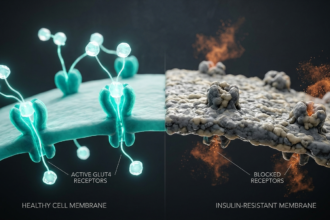
Disruptions in nocturnal sleep architecture decouple these synchronized biological rhythms. When slow-wave deep sleep is abbreviated or artificial blue light exposure shifts melatonin release windows, the human organism enters a transient state of tissue desensitization, mimicking severe metabolic deficiency by the following morning.
1. The MTNR1B Receptor and Nocturnal Pancreatic Suppression
Human evolutionary biology aligns glucose tolerance with endogenous solar patterns. As twilight approaches, the pineal gland upregulates melatonin synthesis. Melatonin binds directly to specific MTNR1B receptors located on the surface of pancreatic beta-cells, initiating a signaling pathway that actively curtails insulin secretion.
This physiological mechanism is a structural defensive protocol designed to transition the body into an unfed, lipid-burning status during sleep. Consuming large caloric loads during high-melatonin windows overloads this suppressed pancreatic pathway, leaving excess glucose in the bloodstream and inducing high local systemic oxidative stress.
2. Sleep Stage Dynamics and Next-Day Insulin Sensitivity
The structural distribution of sleep cycles acts as a master reset mechanism for metabolic clearance pathways. Each distinct phase of sleep executes specific hormonal recalibrations:
During non-REM deep sleep, systemic brain glucose utilization drops significantly while growth hormone (GH) secretion peaks. This shifts skeletal muscle receptors into a resting phase, allowing rapid receptor clearance and recovery.
Uninterrupted sleep architecture minimizes nighttime sympathetic nervous system activity. Lowering cortisol levels prevents hepatic tissue from initiating unprompted nocturnal gluconeogenesis (glucose release).
A well-timed, sharp pulse of cortisol just before waking clears peripheral tissues for day-time metabolic inputs, ensuring rapid glucose clearance during your initial morning breakfast window.
The Biomarkers of Circadian Shift
Clinical assessments show that restricting healthy subjects to 4 hours of sleep for just three consecutive nights decreases insulin sensitivity by up to 40%. Tracking fasting blood glucose levels along with heart rate variability (HRV) during sleep reveals a distinct cross-system pattern linking nervous system restoration directly to efficient nutrient partitioning.
Conclusion: Re-establishing Temporal Synchronization
Achieving permanent glucose optimization is impossible under a state of systemic circadian mismatch. Protecting sleep architecture isn’t merely a strategy for stress management; it is a fundamental metabolic imperative.
Aligning nutrient consumption windows with biological solar rhythms and maximizing high-quality deep sleep allows the peripheral clocks of the body to restore metabolic homeostasis naturally.
Global Wellness Lab
“Chronobiological alignment and neurological recovery serve as the baseline architecture for permanent metabolic flexibility.”
2. Van Cauter, E. et al., “Impact of Sleep Architecture Disruptions on Peripheral Insulin Sensitivity Pathways” – Lancet Diabetes & Endocrinology, 2024.
This technical analysis outlines organic lipid architectures and must not replace custom clinical diagnosis. For advanced cognitive deficits, specialized electroencephalogram testing, or prescription adjustments, consult a certified neurologist.
*** This report is for technical educational purposes. Global Wellness Lab provides independent data for consumer safety and may receive commissions via certified affiliate links. ***
Page Contents
Toggle