
Mitochondrial Biogenesis & Metabolic Flexibility Review
The human bioenergetic network relies on a continuous cellular adaptation process rather than fixed caloric processing. In 2026, clinical infrastructure focuses heavily on this Mitochondrial Biogenesis & Metabolic Flexibility Review — expanding our understanding of how generating new, efficient cellular power plants dictates the body’s capability to switch seamlessly between utilizing carbohydrates and lipids for optimal ATP production.
1. Substrate Switching: The Core Mechanics of Bioenergetics
When cellular machinery exhibits high metabolic flexibility, it alters its fuel source depending on immediate environmental availability. Chronic baseline stagnation, however, forces the system into a state of substrate confusion. This dysfunction traps the tissue in a low-efficiency loop where glucose disposal becomes impaired, causing insulin sensitivity to plummet while oxidative phosphorylation metrics experience systemic degradation.
🧬 2. The PGC-1alpha Activation Cascade
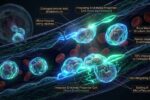
This structural pathway details how target signals trigger new internal network assembly to increase total metabolic output:
- AMPK Signaling: Cellular energy depletion activates the AMP-activated protein kinase pathway, acting as the primary baseline sensor for raw mitochondrial adaptation.
- Nuclear Coactivator Up-regulation: This trigger forces the transcription of PGC-1alpha, the master regulator controlling cellular biogenesis networks.
- Cristae Structural Density: The resulting gene transcription physically rebuilds the inner mitochondrial membrane, optimizing structural respiratory efficiency.
3. Technical Comparison: Biomarker Metrics & Substrate Efficiency
Clinical optimization requires meticulous metric evaluation. The technical comparison table below maps out baseline degradations alongside targeted biohacking protocol responses:
| State | Biomarker | Cellular Link | Standard |
|---|---|---|---|
| Rigid Stagnation | High fasting TG | Lipotoxicity | Beta-Oxidation |
| Impaired Switching | Elevated HOMA-IR | GLUT4 Deficit | AMPK Activation |
| Mito-Insufficiency | Low VO2 Max | Decayed Cristae | Biogenesis Load |
| Optimal Flow | Ideal RQ (0.7-1.0) | Flexible Flux | The GWL Protocol |
⚡ 4. The Mitochondrial Up-regulation Protocol (2026 Strategy)
To force immediate transcription of new metabolic machinery and maximize substrate switching capacity, execute this strategy:
- Kinase Up-regulation: Deploying structured glucose disposal agents paired with natural polyphenols (like Pyrroloquinoline Quinone) to initiate deep respiratory pathway remodeling.
- Substrate Starvation Cycling: Implementing temporary low-carbohydrate inputs to force the upregulation of lipid transporters, directly correcting systemic insulin sensitivity dropouts.
- Zone-5 Mitophagy Triggers: Engaging in short, supramaximal effort intervals to systematically destroy old, leaking mitochondrial networks, clearing space for fresh biogenesis output.
5. Global Wellness Lab Verdict
Completing this rigorous Mitochondrial Biogenesis & Metabolic Flexibility Review cements the fact that metabolic energy is not a static calculation, but a highly dynamic biological network. By prioritizing the structural renewal of your cellular engines and demanding complete versatility from your chemical inputs, you insulate your entire biology from chronic degradation patterns. Authentic systemic longevity requires full control over your metabolic power grid.
Global Wellness Lab
“Resilience is not the absence of stress, but the biological capacity to manage it without systemic degradation.”
6. Legal Disclaimer
This is a technical educational analysis and does not substitute professional medical advice. For parameters regarding advanced metabolic disease screening, clinical VO2 max evaluations, or complex metabolic reconditioning, consult a medical specialist in neuro-metabolism.
Page Contents
Toggle