Extracellular Matrix Remodeling & Metalloproteinase Suppression Protocols
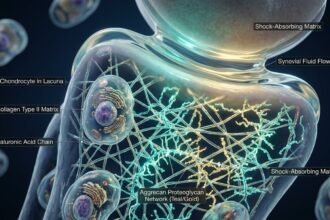
The extracellular matrix (ECM) provides structural architecture, mechanical signaling, and biochemical cues to surrounding tissue. Composed of fibrillar collagens, elastin, and proteoglycans, the ECM undergoes continuous remodeling. Chronically elevated Inflammaging and Senescence-Associated Secretory Phenotype (SASP) factors upregulate Matrix Metalloproteinases (MMPs), fragmenting collagen networks and causing tissue collapse.
1. MMP-1/MMP-9 Cleavage and TGF-β/Smad Fibroblast Signaling
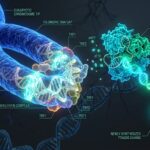
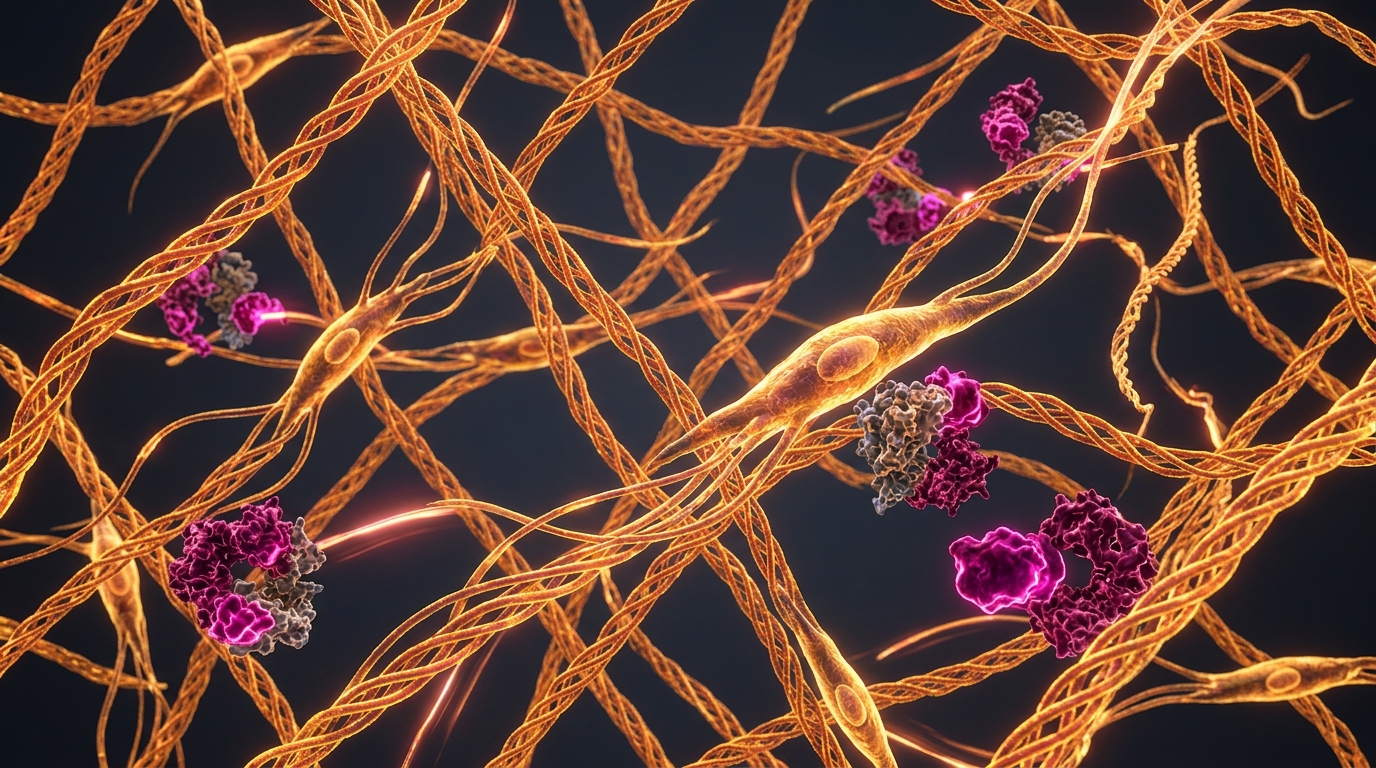
Excessive ROS and pro-inflammatory cytokines trigger AP-1 and NF-κB transcription factor pathways, driving expression of MMP-1 (collagenase) and MMP-9 (gelatinase). These enzymes cleave native Type I and Type III collagen triple-helices into fragments, disrupting mechanical tension required for fibroblast survival. Restoring Transforming Growth Factor-Beta (TGF-β)/Smad signaling reactivates quiescent fibroblasts, promoting pro-collagen synthesis and ECM assembly.
2. Structural Matrix Profile
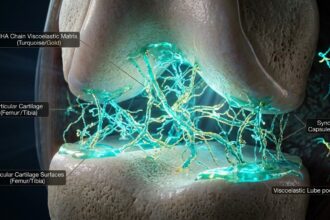
Uncontrolled metalloproteinase cleavage paired with sugar-driven cross-linking stiffens matrix architecture, impairing nutrient diffusion and tissue function.
Balanced TIMP/MMP ratios combined with active fibroblast pro-collagen secretion restore connective tissue mechanical integrity and hydration.
3. ECM Remodeling Bioactives & Fibroblast Activators
4. TIMP and MMP Dynamic Balance
Tissue Inhibitors of Metalloproteinases (TIMP-1, TIMP-2) regulate active MMP endopeptidases. When TIMP levels decline due to chronic oxidative stress, active MMPs unchecked by endogenous inhibitors degrade extracellular proteins. Re-establishing optimal TIMP-to-MMP stoichiometric ratios is essential to prevent structural degradation while maintaining physiological tissue remodeling.
5. The Extracellular Matrix Restoration Protocol
Introduce Rosmarinic Acid paired with targeted antioxidants to downregulate MMP-1/9 expression and prevent structural collagen cross-linking by AGEs.
Administer GHK-Cu peptides alongside Asiaticoside to trigger TGF-β/Smad signaling, driving new pro-collagen and proteoglycan matrix synthesis.
6. Global Wellness Lab Verdict
Preserving structural extracellular matrix stability requires addressing both enzymatic degradation and cross-linking stiffening. By combining metalloproteinase inhibitors, anti-glycation agents, and fibroblast-activating peptides, protocol strategies preserve connective tissue mechanical function and regenerative potential.
- Pickart, L., & Margolina, A. (2018). “Regenerative and protective actions of the GHK-Cu peptide in the light of the new gene data.” International Journal of Molecular Sciences, 19(7), 1987.
- Fisher, G. J., et al. (2002). “Looking deeper: mechanisms of skin aging and collagen degradation.” Archives of Dermatology, 138(11), 1462-1470.
- Bylka, W., et al. (2013). “Centella asiatica in cosmetology.” Postepy Dermatologii i Alergologii, 30(1), 46-49.
- Page-McCaw, A., et al. (2007). “Matrix metalloproteinases and the regulation of tissue remodeling.” Nature Reviews Molecular Cell Biology, 8(3), 221-233.
Global Wellness Lab
“Resilience is not the absence of stress, but the biological capacity to manage it without systemic degradation.”
Page Contents
Toggle