Category: Joint Health
Biophysics | Technical Level: Advanced | Read Time: 11 min
Joint longevity is a matter of structural engineering. The interface between bone and movement relies on two critical components: the Extracellular Matrix (ECM) of the cartilage and the non-Newtonian properties of the synovial fluid. In 2026, shifting the focus from simple “pain management” to “structural reinforcement” is the key to maintaining peak mobility.
1. The ECM Architecture: Type II Collagen & Proteoglycans
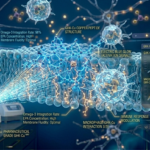
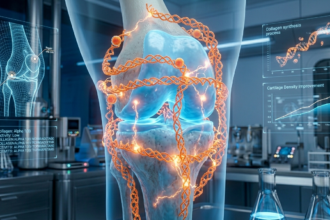
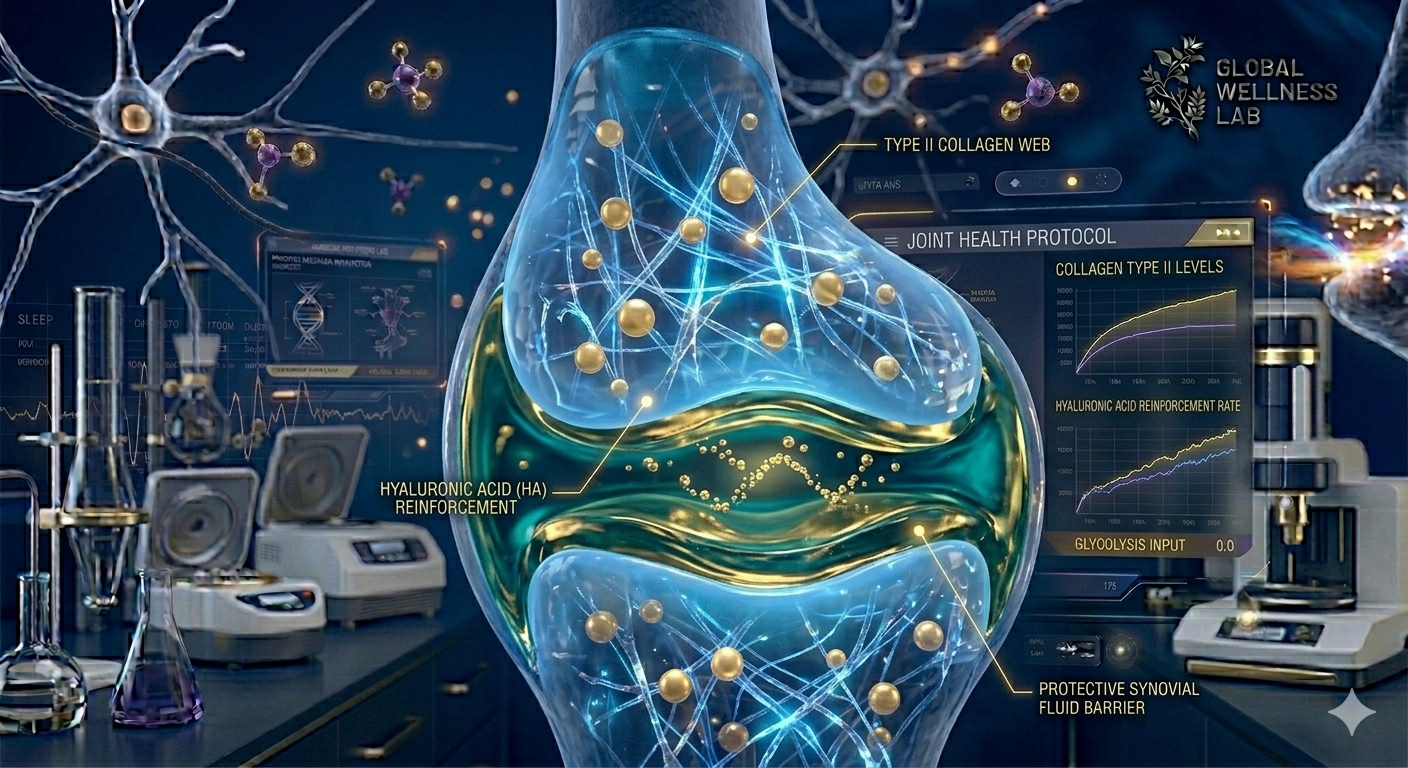
Cartilage is a highly specialized tissue that lacks blood vessels and nerves. Its resilience depends entirely on the integrity of the Type II Collagen network. This protein scaffold provides tensile strength, while proteoglycans (like Aggrecan) attract water, creating the osmotic pressure necessary to absorb high-impact shocks during locomotion.
2. New Layout Block: The Synovial Lubrication Cycle
This technical block illustrates how joint movement regulates its own maintenance:
- Hydrodynamic Lubrication: During low-load movement, a thin film of synovial fluid separates the articular surfaces, reducing friction to near-zero levels.
- Boundary Lubrication: Under high loads, specialized proteins like Lubricin bind to the cartilage surface, preventing direct tissue-to-tissue contact.
- Nutrient Exchange: Since cartilage is avascular, the compression and decompression of movement act as a “pump,” forcing nutrients from the synovial fluid into the chondrocytes (cartilage cells).
3. Technical Comparison: Bioactive Compounds for Structural Support
| Component | Biological Role | Molecular Target | 2026 Efficiency Standard |
| Undenatured Collagen | Immune Modulation | Peyer’s Patches | Oral Tolerance Induction |
| Hyaluronic Acid | Viscosupplementation | Synovial Fluid | High Molecular Weight (HMW) |
| Chondroitin Sulfate | Osmotic Pressure | ECM Proteoglycans | Pharmaceutical Grade (>95%) |
| Glucosamine HCl | Substrate Supply | GAG Synthesis | Low Sodium Stabilization |
4. New Layout Block: The 2026 Joint Preservation Protocol
To prevent the degradation of the cartilage matrix (Matrix Metalloproteinases – MMPs), we implement this structural checklist:
- MMP Inhibition: Utilizing specific polyphenols to inhibit enzymes that break down the collagen scaffold during high-intensity training.
- Hydration Osmolarity: Maintaining systemic hydration to ensure the proteoglycans can fulfill their water-binding capacity for shock absorption.
- Mechanical Loading: Implementation of “Progressive Joint Loading” to stimulate chondrocyte metabolic activity without exceeding the structural threshold.
5. Global Wellness Lab Verdict
The future of joint health lies in the preservation of the biological machinery. By protecting the synovial fluid’s viscosity and the cartilage’s structural density, we transform joints from a point of vulnerability into a foundation of performance. As stated in our Editorial Policy, joint integrity is a long-term investment in structural biology.
6. Legal Disclaimer
This is a technical educational analysis and does not substitute professional medical advice. For persistent joint issues or orthopedic conditions, consult a qualified specialist.