Systemic Neuroinflammation & Blood-Brain Barrier Restoration Protocols
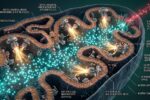
The Blood-Brain Barrier (BBB) is a specialized neurovascular unit (NVU) composed of brain microvascular endothelial cells, astrocytic end-feet, and pericytes. It maintains central nervous system homeostasis by tightly regulating solute transport into the brain parenchyma. Chronic systemic low-grade inflammation, elevated circulatory cytokines, and neurotoxic metabolites degrade specialized tight junctions—primarily Claudin-5 and Occludin—leading to paracellular permeability, microglial hyper-reactivity, and accelerated neurodegeneration.
1. Claudin-5 Degradation and Microglial Phenotype Polarization
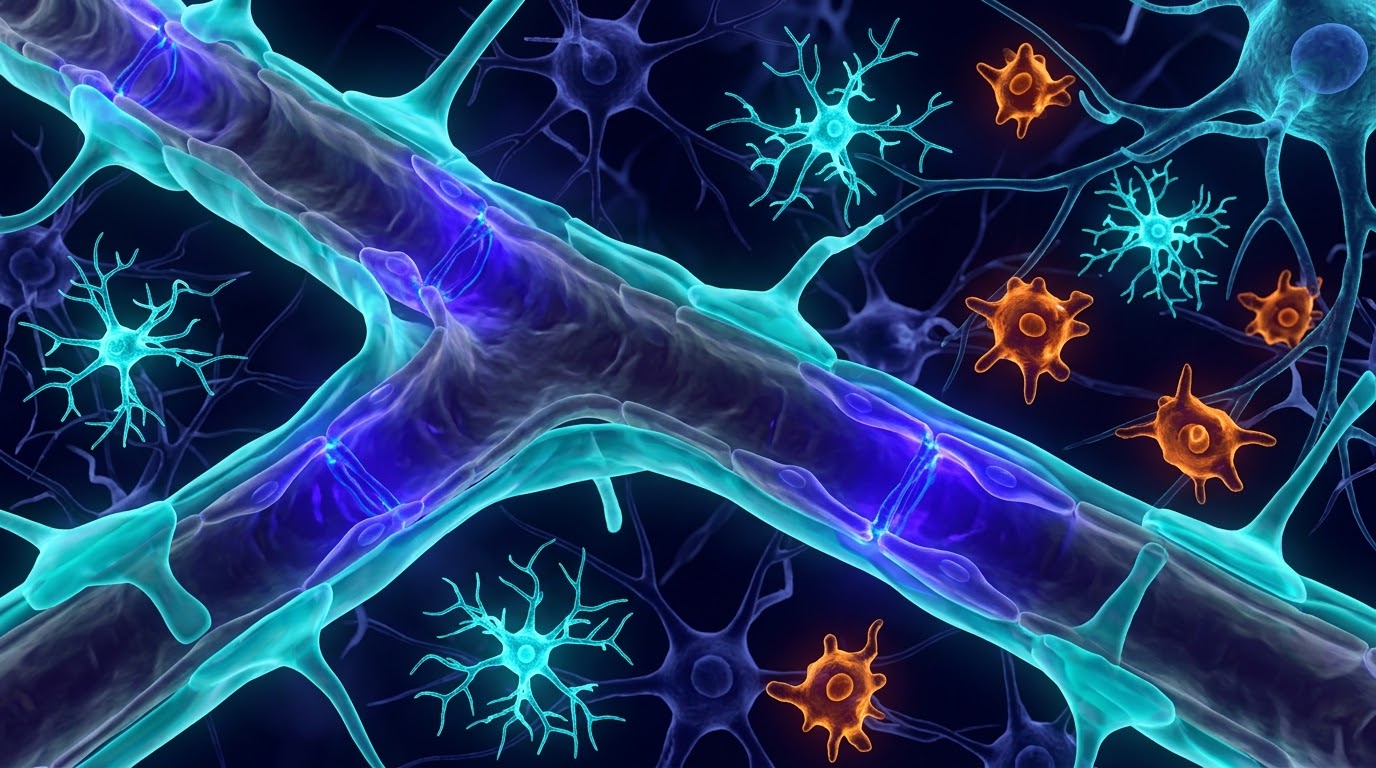
Claudin-5 is the dominant structural protein determining tight junction selectivity within brain capillaries. Degradation of Claudin-5 permits systemic inflammatory mediators (TNF-α, IL-6, LPS) to penetrate the brain parenchyma. Once exposed to inflammatory toxins, resident microglia shift from a homeostatic M2 surveillance state to a pro-inflammatory M1 phenotype, releasing matrix metalloproteinases (MMPs) and neurotoxic ROS that further dismantle BBB integrity and damage synaptic networks.
2. Neurovascular Integrity Profile
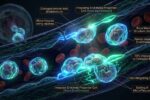
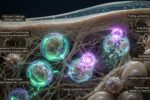
Disrupted endothelial tight junctions allow peripheral cytokines to enter the parenchyma, driving prolonged neuroinflammation and loss of synaptic density.
Restored Claudin-5 expression coupled with M2 microglial activity maintains vascular tight junction resistance and fosters neural network repair.
3. Neurovascular Modulators & Endothelial Protectors
4. Astrocytic End-Feet Crosstalk and Glymphatic Clearance
Astrocytic end-feet express dense Aquaporin-4 (AQP4) water channels, surrounding brain capillaries to facilitate glymphatic fluid transport and metabolic waste clearance. Neurovascular inflammation disrupts AQP4 polarization, imparing waste drainage and increasing parenchymal toxin accumulation. Restoring endothelial tight junctions realigns astrocytic end-feet, allowing normal glymphatic flow to resume during slow-wave sleep cycles.
5. The Neurovascular Barrier Restoration Protocol
Administer Trans-Resveratrol paired with SPMs to downregulate MMP-9 activity, prevent Claudin-5 degradation, and halt peripheral cytokine influx.
Utilize Liposomal Luteolin to shift microglia from M1 to M2 state while supporting sleep-dependent AQP4 polarized glymphatic waste drainage.
6. Global Wellness Lab Verdict
Protecting the central nervous system requires rigorous maintenance of the neurovascular unit. By stabilizing endothelial tight junctions with resveratrol, resolving neuroinflammation with SPMs, and reining in microglial activation with flavonoids, protocol strategies effectively safeguard cognitive reserves.
- Sweeney, M. D., et al. (2019). “Blood-brain barrier breakdown in Alzheimer’s disease and other neurodegenerative disorders.” Nature Reviews Neurology, 15(3), 133-150.
- Jang, S., et al. (2008). “Luteolin reduces IL-6 production in microglia by inhibiting JNK and AP-1 signaling pathways.” Journal of Neuroinflammation, 5(1), 1-14.
- Iliff, J. J., et al. (2012). “A paravascular pathway facilitates CSF flow through the brain parenchyma and the clearance of interstitial solutes.” Science Translational Medicine, 4(147), 147ra111.
- Serhan, C. N. (2014). “Pro-resolving lipid mediators in inflammation resolution.” Nature, 510(7503), 92-101.
Global Wellness Lab
“Resilience is not the absence of stress, but the biological capacity to manage it without systemic degradation.”
Page Contents
Toggle