
Category: Metabolic Health
Cellular Bioenergetics | Technical Level: Advanced | Read Time: 14 min
Mitochondria are not merely the “powerhouses” of the cell; they are the ultimate environmental sensors. In 2026, longevity science focuses on Mitochondrial Resilience—the capacity of these organelles to maintain ATP (Adenosine Triphosphate) production under conditions of oxidative stress or nutritional fluctuation.
1. The Architecture of Cellular Energy Production
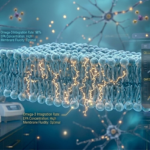
ATP production occurs via oxidative phosphorylation within the mitochondrial cristae. This process relies on a perfectly aligned electron transport chain (ETC).
1.1 The Role of the Electron Transport Chain (ETC)
The ETC consists of four primary protein complexes. The movement of electrons through these complexes creates a proton gradient that drives ATP synthase, the “nanomachine” that generates the chemical energy of life.
1.2 The Concept of Electron “Leakage”
When mitochondrial efficiency declines, electrons “leak” from the chain and react with oxygen, forming reactive oxygen species (ROS). A resilient mitochondrion minimizes this leakage through endogenous defense systems.
2. Mitochondrial Fusion and Fission Dynamics
Mitochondria are dynamic; they fuse to share resources or divide to isolate damaged parts.
2.1 Mitochondrial Fusion (Optimization)
Fusion allows healthy mitochondria to complement less efficient ones, maximizing energy production during periods of high metabolic demand.
2.2 Fission and Mitophagy (Cleaning)
Fission separates dysfunctional mitochondrial components, which are then eliminated through Mitophagy (mitochondria-specific autophagy), preventing the propagation of mitochondrial DNA (mtDNA) damage.
3. Next-Generation Bioenergetic Modulators
To support mitochondrial resilience, 2026 precision nutrition utilizes compounds that act directly on biogenesis and membrane protection.
| Compound | Mechanism of Action | Primary Benefit | 2026 Standard |
|---|---|---|---|
| PQQ | PGC-1α Activation | Mitochondrial Biogenesis | High Purity (>99%) |
| Coenzyme Q10 | Electron Transport | Antioxidant Protection | Ubiquinol (Bioavailability) |
| Niacin (NAD+) | Metabolic Substrate | DNA Repair | Stabilized Precursors |
| L-Carnitine | Fatty Acid Transport | Optimized Beta-Oxidation | Acetylated Form (ALCAR) |
4. GWL Mitochondrial Strengthening Protocol
To optimize mitochondrial density and energy efficiency, we implement the following technical interventions:
4.1 Thermal Hormesis
Controlled cold exposure (Cryotherapy) activates uncoupling protein 1 (UCP1), which induces mitochondria to produce heat instead of ATP, forcing the system to become more robust and efficient.
4.2 Photobiomodulation (Red Light Therapy)
The use of red and near-infrared light wavelengths (660nm – 850nm) stimulates cytochrome c oxidase (Complex IV), accelerating ATP synthesis and reducing cellular inflammation.
4.3 Structured Glycogen Fasting
Periods of low glucose availability force mitochondria to utilize fatty acids, a process that generates fewer ROS per unit of ATP produced compared to glucose metabolism.
5. Global Wellness Lab Verdict
Mitochondrial resilience is the life insurance of your cellular biology. By protecting cristae integrity and promoting regular mitophagy, you ensure your energy production remains stable decades ahead. As detailed in our Editorial Policy, bioenergetics is the central pillar of our metabolic health approach.
6. Legal Disclaimer
This is a technical educational analysis and does not substitute professional medical advice. For conditions related to chronic fatigue or metabolic dysfunction, consult a specialist in functional medicine or endocrinology.