Endothelial Glycocalyx Preservation & eNOS Coupling Protocols
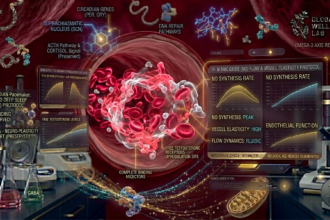
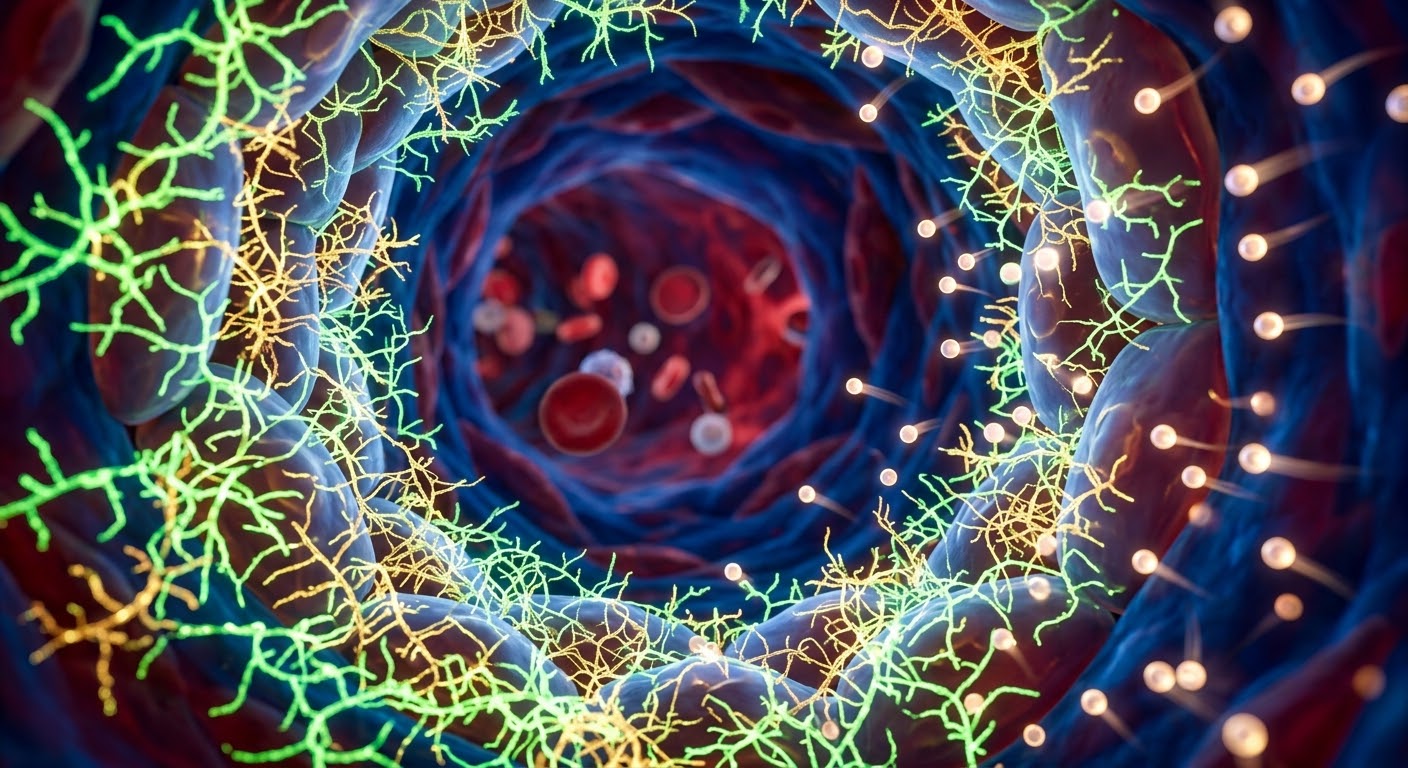
The vascular endothelium is an active endocrine organ that regulates vascular tone, nutrient delivery, and leukocyte adhesion. A vital component is the Endothelial Glycocalyx—a delicate proteoglycan layer lining the luminal surface. Oxidative stress, elevated glucose, and chronic shear stress degrade the glycocalyx and cause eNOS uncoupling. Uncoupled eNOS produces superoxide radicals ($O_2^{\bullet-}$) instead of Nitric Oxide ($\text{NO}$), leading to endothelial dysfunction and microvascular rarefaction.
1. Tetrahydrobiopterin ($BH_4$) Availability & eNOS Coupling
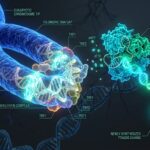
Endothelial Nitric Oxide Synthase (eNOS) requires the essential cofactor Tetrahydrobiopterin ($BH_4$) to convert L-arginine into Nitric Oxide ($\text{NO}$) and L-citrulline. Peroxynitrite oxidation converts $BH_4$ into inactive $BH_2$, destabilizing the dimeric eNOS structure. Uncoupled eNOS transfers electrons directly to molecular oxygen, generating superoxide ($O_2^{\bullet-}$), which further depletes $\text{NO}$ through peroxynitrite formation ($ONOO^-$). Maintaining adequate $BH_4$ levels restores eNOS dimerization and promotes endothelial vasodilation.
Microvascular Perfusion Comparison Matrix
| Parameter | Degraded Endothelium | Restored Endothelium |
|---|---|---|
| Primary Output | Superoxide Anion ($O_2^{\bullet-}$) | Nitric Oxide ($\text{NO}$) |
| Glycocalyx Depth | Severely Shed (<0.2 µm) | Intact Matrix (0.5–1.2 µm) |
| Vascular Tone | Vasoconstriction / High Shear | Flow-Mediated Dilation (FMD) |
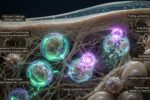
2. Endothelial Bio-Structural Profile
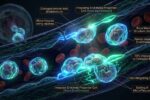
Enzymatic degradation of Heparan Sulfate proteoglycans exposes adhesion molecules (ICAM-1, VCAM-1), driving vascular inflammation and microvascular constriction.
Adequate $BH_4$ levels paired with precursor supplementation support eNOS dimerization, preserving endothelial barrier function and microvascular flow.
3. Endothelial Therapeutics & Nitric Oxide Modulators
4. Shear Stress Mechanotransduction Signaling
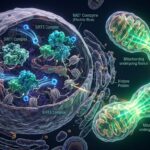
Laminar blood flow creates fluid shear stress across the endothelial glycocalyx, activating mechanosensitive ion channels (Piezos1) and Akt kinase signaling pathways. Akt phosphorylates eNOS at Serine 1177, augmenting $\text{NO}$ synthesis independently of calcium spikes. Maintaining glycocalyx depth is necessary to transmit shear stress effectively to underlying endothelial structures.
5. The Endothelial Microvascular Protocol
Supply glycosaminoglycan precursors alongside Pycnogenol to rebuild the luminal proteoglycan layer and inhibit MMP-driven surface degradation.
Administer high-dose L-Citrulline paired with $BH_4$-preserving antioxidants to promote eNOS dimerization and enhance nitric oxide synthesis.
6. Global Wellness Lab Verdict
Maintaining optimal microvascular perfusion requires both structural glycocalyx defense and coupled eNOS activity. Re-establishing endothelial shear signaling lowers peripheral resistance and preserves tissue oxygenation across critical organ systems.
- Pries, A. R., et al. (2000). “The endothelial glycocalyx: a potential barrier between blood and tissues.” Pflügers Archiv, 440(5), 653-666.
- Forstermann, U., & Sessa, W. C. (2012). “Nitric oxide synthases: regulation and function.” European Heart Journal, 33(7), 829-837.
- Tarbell, J. M., & Cancel, L. M. (2016). “The glycocalyx and its role in vascular physiology and pathobiology.” Journal of Internal Medicine, 280(1), 97-113.
- Alp, N. J., & Channon, K. M. (2004). “Regulation of endothelial nitric oxide synthase by tetrahydrobiopterin in vascular disease.” Arteriosclerosis, Thrombosis, and Vascular Biology, 24(3), 413-420.
Global Wellness Lab
“Resilience is not the absence of stress, but the biological capacity to manage it without systemic degradation.”
Page Contents
Toggle