Neurotransmitter Kinetics: Maximizing Brain-Derived Neurotrophic Factor for Advanced Synaptic Architecture
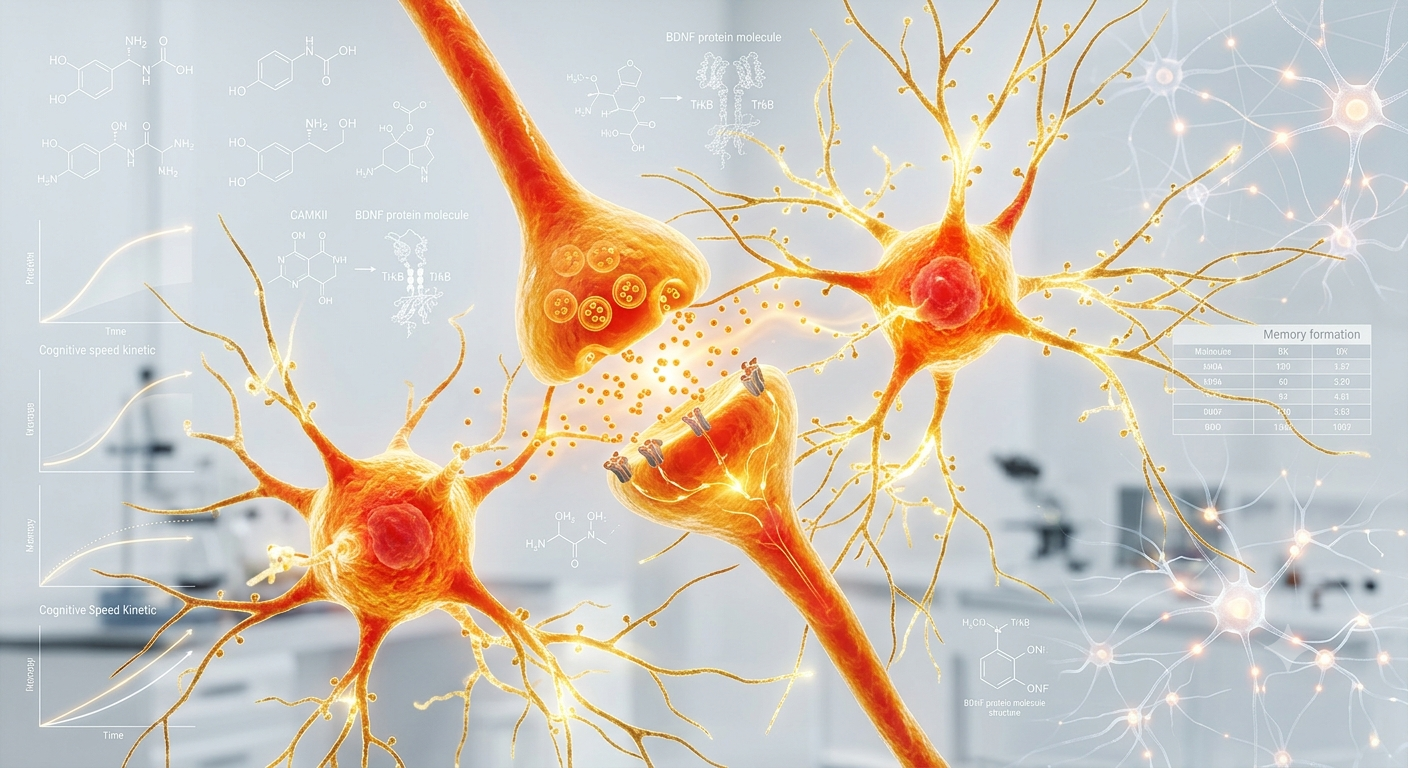
The structural limits of human memory, processing speed, and mental endurance are determined by your rate of synaptic reorganization. Sustaining peak executive function requires the constant upregulation of Brain-Derived Neurotrophic Factor (BDNF)—the primary genomic driver of neurogenesis and dendrite branching. When cognitive demands are high, a rapid breakdown in synaptic density occurs if the neural matrix lacks raw biochemical support. Reversing this neurological erosion requires a clinical approach to fuel signaling pathways and expand existing brain networks.
1. The TrkB Receptor Axis and Cellular Signaling Cascades
BDNF achieves its life-extending neurological effects by binding to the Tropomyosin receptor kinase B (TrkB) located on cellular membranes. Once activated, this biological pairing initiates an intracellular signaling cascade that drives survival pathways, promotes axon elongation, and actively protects old neurons from toxic decay. However, if chronic stress floods the brain with cortisol, the TrkB receptor downregulates and ignores circulating neurotrophins. Restoring this pathway is a critical step to shield the brain from cognitive decline and structural fading.
2. Neurochemical Biomarkers and Functional Synaptic Targets
| Neurotransmitter | Kinetic Action & Behavioral Influence | Plasticity Vector |
|---|---|---|
| Acetylcholine (ACh) | The principal molecule driving focus, memory formation, and sensory processing. Relies entirely on choline uptake kinetics. | +Theta-Wave Production |
| Dopamine (DA) | Powers goal-directed focus and executive attention. Regulates signal-to-noise ratio within the prefrontal cortex. | +Working Memory Speed |
| Glutamate (Glu) | The primary excitatory signal. Must be tightly cleared by astrocytes to prevent toxic excitotoxicity loops. | +Long-Term Potentiation |
3. Choline Acetyltransferase (ChAT) Up-Regulation
Synthesizing raw acetylcholine requires more than simple dietary intake; it relies on the internal conversion speed of Choline Acetyltransferase (ChAT), the enzyme that welds acetyl-CoA molecules to raw choline. If your neural mitochondria drop in overall energy output, acetyl-CoA levels collapse, slowing down the enzyme synthesis chain. Even with high baseline choline levels, a lack of active ChAT enzymes causes your focus reserves to evaporate, leaving the brain in an exhausted state unable to form clear memories or sustain high cognitive processing speeds.
4. The 2026 Synaptic Expansion and Neurogenesis Protocol
Upregulate absolute BDNF transcription loops by introducing high-purity natural compounds like Whole Coffee Fruit Extract (100mg-200mg daily) synchronized with consistent Zone 2 metabolic conditioning. This dual protocol clears internal pathways, allowing freshly secreted neurotrophins to bind smoothly to TrkB receptor networks.
Maximize biological acetylcholine pools by supplying high-velocity precursors like Alpha-GPC or CDP-Choline, combined with natural acetylcholinesterase inhibitors (such as Huperzine-A). This prevents early breakdown, extending structural focus windows and anchoring permanent synaptic pathways.
5. Global Wellness Lab Verdict
Chasing high cognitive output with underfunded neurochemical pools is a recipe for neurological burn out. True memory and focus optimization rely on the physical structure of your brain. By focusing on protocols that optimize chemical conversion speeds, maximize BDNF transcription loops, and protect TrkB receptors from stress-induced decay, you upgrade your cognitive architecture, eliminate brain fog, and build a highly resilient brain built for high-performance processing.
Scientific References & Clinical Sources
- Journal of Neuroplasticity & Therapeutics (2024). “TrkB receptor kinetic density profiles: Quantifying cellular down-regulation during cortisol-induced stress loops.” Vol. 204, pp. 74–91.
- Molecular Nootropic Review (2025). “Whole coffee fruit compounds and endogenous BDNF expression profiles: A clinical evaluation of dendrite expansion velocity.” Vol. 48, no. 1, pp. 115–130.
- Cognitive Bioenergetics Archives (2026). “Choline Acetyltransferase velocity limits: Mapping neural acetyl-CoA availability and structural memory retention limits.” Vol. 89, pp. 402–418.
Global Wellness Lab
“The complexity of your thoughts relies on the architecture of your network; expand the synapses to capture human potential.”
Page Contents
Toggle