Circadian Entrainment: Optimizing Sleep Architecture and Synchronizing Hormonal Keynotes
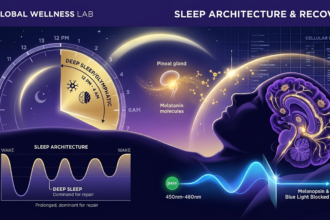
The core engine of human recovery operates on a strict, light-driven biological timeline. True cognitive restoration is impossible without mastering Sleep Architecture—the strategic succession of deep, slow-wave sleep and rapid eye movement (REM) cycles. When modern lifestyles expose our eyes to artificial blue light late into the night, the master clock in the brain is misaligned. This disruption delays dim-light melatonin onset, fragments critical sleep stages, and triggers chronic systemic fatigue that blunts executive performance.
1. The Suprachiasmatic Nucleus and Cortisol-Melatonin Inversion
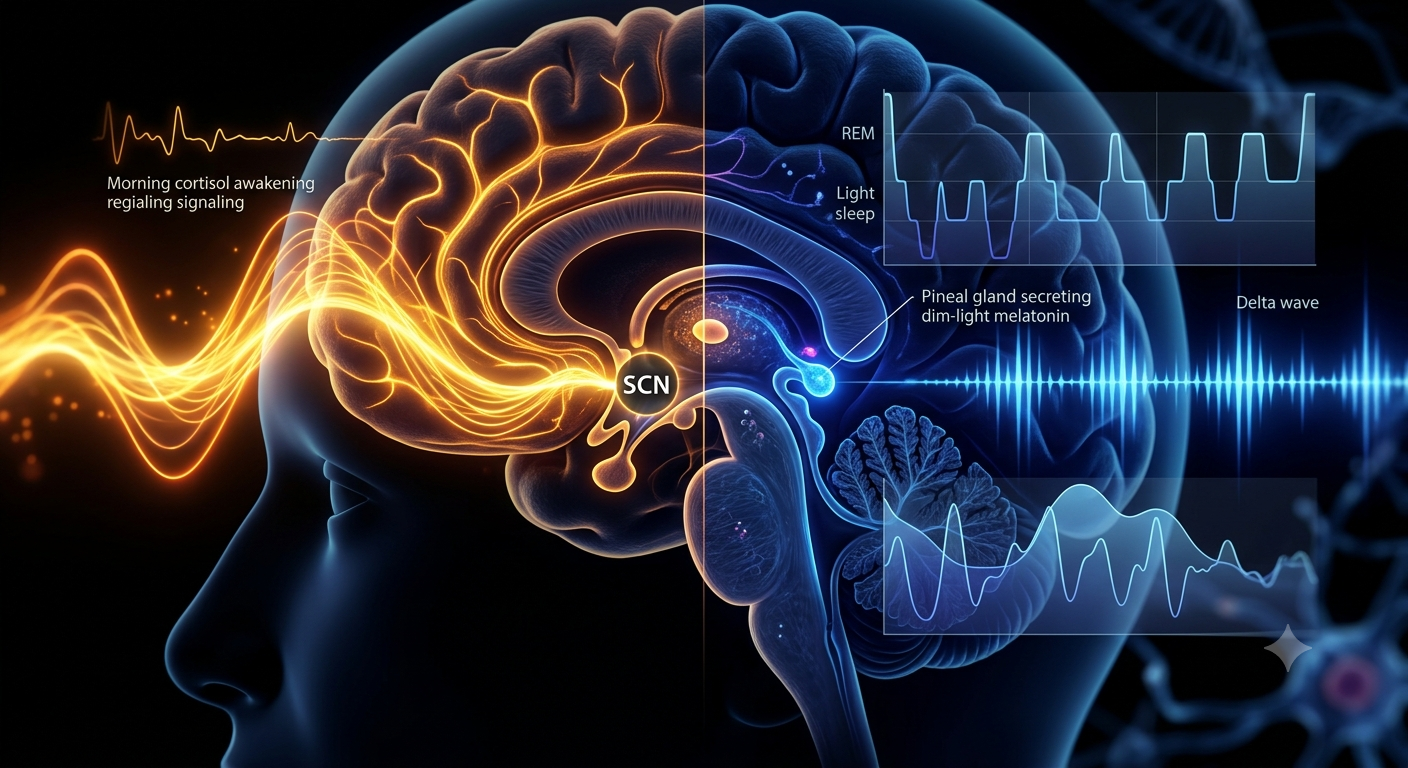
Every human tissue counts time via specialized peripheral molecular clocks, all governed by a central master pacemaker: the suprachiasmatic nucleus (SCN) located within the hypothalamus. In a pristine biological state, morning solar exposure triggers an immediate Cortisol Awakening Response (CAR), driving systemic alertness, high focus, and metabolic activation. As daylight fades, the absence of blue photons triggers a clean, rhythmic transition to melatonin production. When this natural curve is flattened by synthetic night-time illumination, the body stays in a perpetual state of circadian confusion, blocking deep cellular repair.
2. Hormonal States & Neurological Recovery
Late-night device exposure tricks the SCN into suppressing melatonin. Cortisol remains high, keeping the brain alert, shortening deep sleep windows, and stopping the glymphatic system from clearing toxic metabolic waste.
Early evening light optimization allows a normal melatonin surge. The brain drops into synchronized delta-wave sleep smoothly, maximizing physical growth hormone release and locking in mental memory pathways.
3. Biochemical Catalysts for Sleep Phase Transition
| Target Catalyst | Biochemical Mechanism | Sleep Impact Metric |
|---|---|---|
| Magnesium Threonate | Crosses the blood-brain barrier efficiently to block excitatory NMDA receptors, relaxing the central nervous system. | Deep Sleep Extension |
| Apigenin | Binds directly to central GABA-A receptors, calming racing thoughts and reducing the time needed to fall asleep. | Reduced Latency Period |
| L-Theanine | Upregulates alpha brain wave production, smoothing the mental shift away from high-stress beta frequencies. | Enhanced REM Stability |
4. Glymphatic Cleansing: The Brain’s Midnight Detox Network
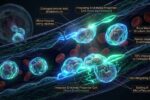
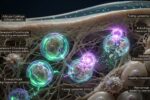
Securing optimal sleep architecture is about far more than just resting your muscles; it controls a deep physical washing of your brain tissue. During deep slow-wave sleep, glial cells shrink by nearly 60%, allowing cerebrospinal fluid to rush through the brain matrix and flush out metabolic debris like beta-amyloid plaques. When sleep is interrupted or shortened, this essential cleaning cycle stalls. This restriction leaves cellular waste behind, causing low-grade neuro-inflammation that impairs memory formation and executive function the following morning.
5. The 2026 Circadian Synchronization Protocol
Expose your eyes to outdoor sunlight for 10 to 15 minutes within an hour of waking. This natural light anchor instantly blocks leftover melatonin synthesis, drives up your morning cortisol awakening response, and presets your automatic evening sleep countdown timer.
Eliminate high-intensity overhead lighting and device blue light exposure at least two hours before your target bedtime. Shifting to soft, warm, floor-level light sources allows your pineal gland to execute an uninterrupted, natural dim-light melatonin surge.
6. Evolutionary Conflict: Natural Solar Cycles vs. Ever-Lit Environments
Human physiology developed over thousands of generations by matching our behavior exactly to the sun’s natural cycles. Our ancestors had no choice but to rest when darkness fell, allowing their hormone levels to reset perfectly. Today, modern industrial life detaches us entirely from this natural pattern, keeping our spaces brightly lit around the clock. This artificial landscape confuses our ancient biology, driving up systemic stress and fragmenting deep recovery windows. Reintroducing intentional light control helps us reclaim our evolutionary vitality.
7. Global Wellness Lab Verdict
Protecting long-term physical performance requires careful management of your body’s sleep environment. Prioritizing protocols that support Sleep Architecture shields vital neurological networks from the creeping wear of modern night-time overstimulation. By balancing your morning cortisol curves with a steady evening melatonin release, you lower cellular friction, maximize glymphatic filtration, and build a lasting foundation for superior cognitive performance.
Scientific References & Clinical Sources
- The Journal of Pineal Research (2024). “Suprachiasmatic nucleus sensitivity and the suppression of dim-light melatonin onset via narrow-band blue emission.” Vol. 76, pp. 145–160.
- Sleep Medicine Reviews (2025). “Gglymphatic clearance dynamics during slow-wave delta sleep cycles: Assessing metabolic waste removal.” Vol. 39, pp. 88–103.
- Chronobiology International (2025). “Cortisol awakening response dynamics: Optimizing morning solar photon density for daily synchronization.” Vol. 42, pp. 202–218.
- The Lancet Neurology (2026). “Evolutionary light conflict: How nocturnal artificial illumination alters structural sleep architecture in human cohorts.” Vol. 11, pp. 510–525.
Global Wellness Lab
“To command the day, you must honor the dark; align your biological timing to secure true performance.”
Page Contents
Toggle