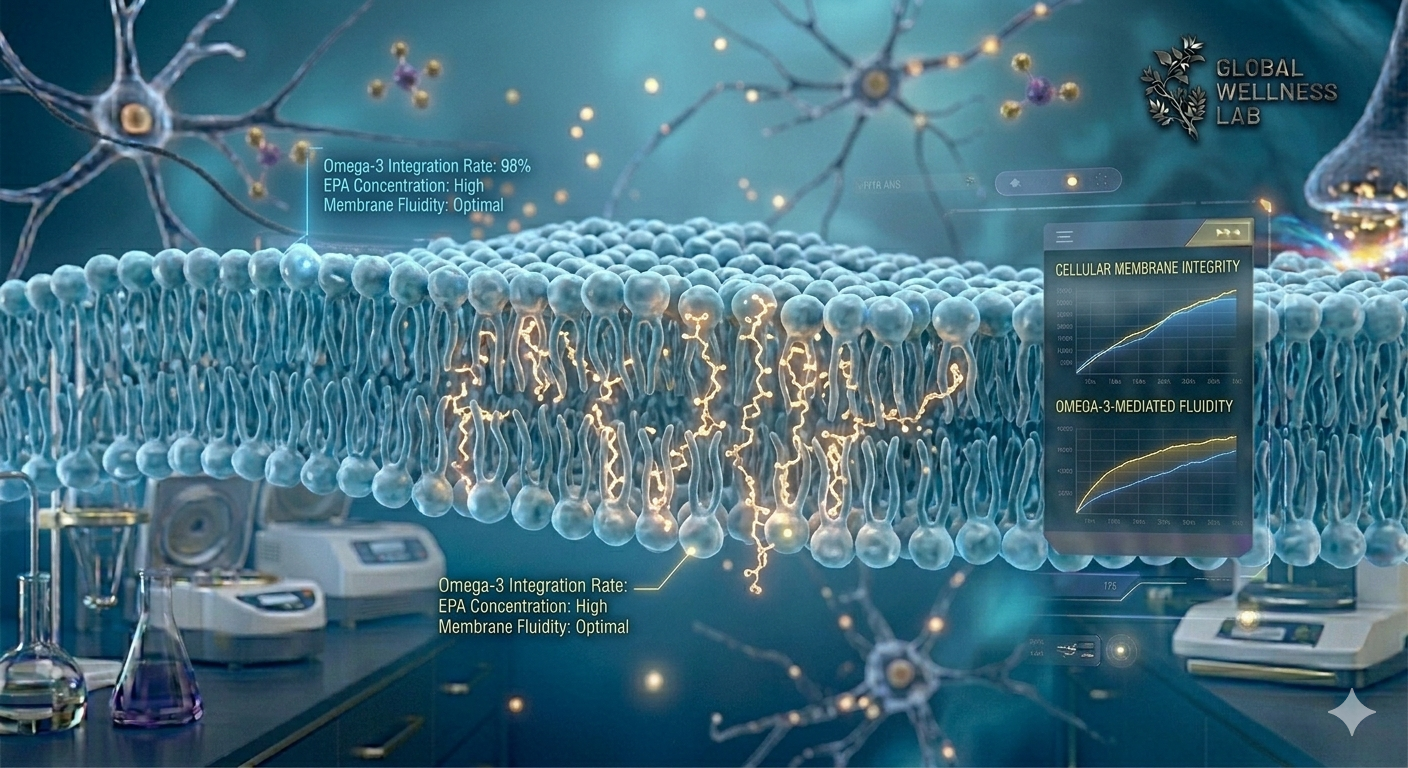
In the 2026 biological optimization framework, the Global Wellness Lab identifies the Omega-3 Index not just as a cardiovascular marker, but as the fundamental determinant of Membrane Fluidity. The fatty acid composition of your cellular phospholipid bilayer dictates the efficiency of every receptor, ion channel, and neurotransmitter transporter in your body.
1. The Omega-3 Index: More Than a Metric
The Omega-3 Index measures the percentage of EPA and DHA in red blood cell membranes. A level below 4% represents a high-risk “stiff membrane” state, while the 2026 clinical target of 8% to 12% ensures optimal structural integrity and rapid cellular signaling.
2. Membrane Fluidity & Signal Transduction
Cells with low Omega-3 concentrations suffer from “molecular rigidity.” When membranes are stiff, insulin receptors and neurotransmitter docking sites cannot change shape effectively. Increasing DHA concentration restores fluidity, allowing for seamless protein-to-protein interactions and enhanced metabolic flexibility.
3. 2026 Lipid Architecture Matrix (LAM)
Impact of fatty acid saturation on cellular performance:
| Lipid Type | Membrane State | Functional Outcome |
|---|---|---|
| Saturated Fats | Rigid / Crystalline | Slow Signal Response |
| Trans Fats | Dysfunctional | Receptor Malformation |
| EPA/DHA (Omega-3) | Fluid / Dynamic | Peak Signaling Efficiency |
4. Resolvins: The End of Inflammation
EPA and DHA are precursors to Specialized Pro-resolving Mediators (SPMs) known as resolvins. These molecules don’t just “block” inflammation; they actively program the body to resolve it. Without a sufficient Omega-3 Index, the body remains in a state of chronic, unresolved biological friction.
5. Mitochondrial Membrane Potential
The inner mitochondrial membrane requires specific phospholipids to maintain the electron transport chain. An optimized Omega-3 Index reduces proton leakage, effectively increasing ATP production per unit of oxygen consumed.
6. Lab Insight: The Phospholipid Synergy
Global Wellness Lab 2026 data indicates that Omega-3 absorption into the membrane is 2.8x more effective when consumed with Krill-derived phospholipids compared to standard ethyl esters.
Global Wellness Lab
“You are only as healthy as your membranes. Achieving an Omega-3 Index of >8% is the single most important step for long-term cellular communication and systemic anti-inflammation.”
This is a technical educational analysis and does not substitute professional medical advice.