NAD+ Salvage Pathway Modulation & SIRT1/SIRT3 Deacetylation Protocols
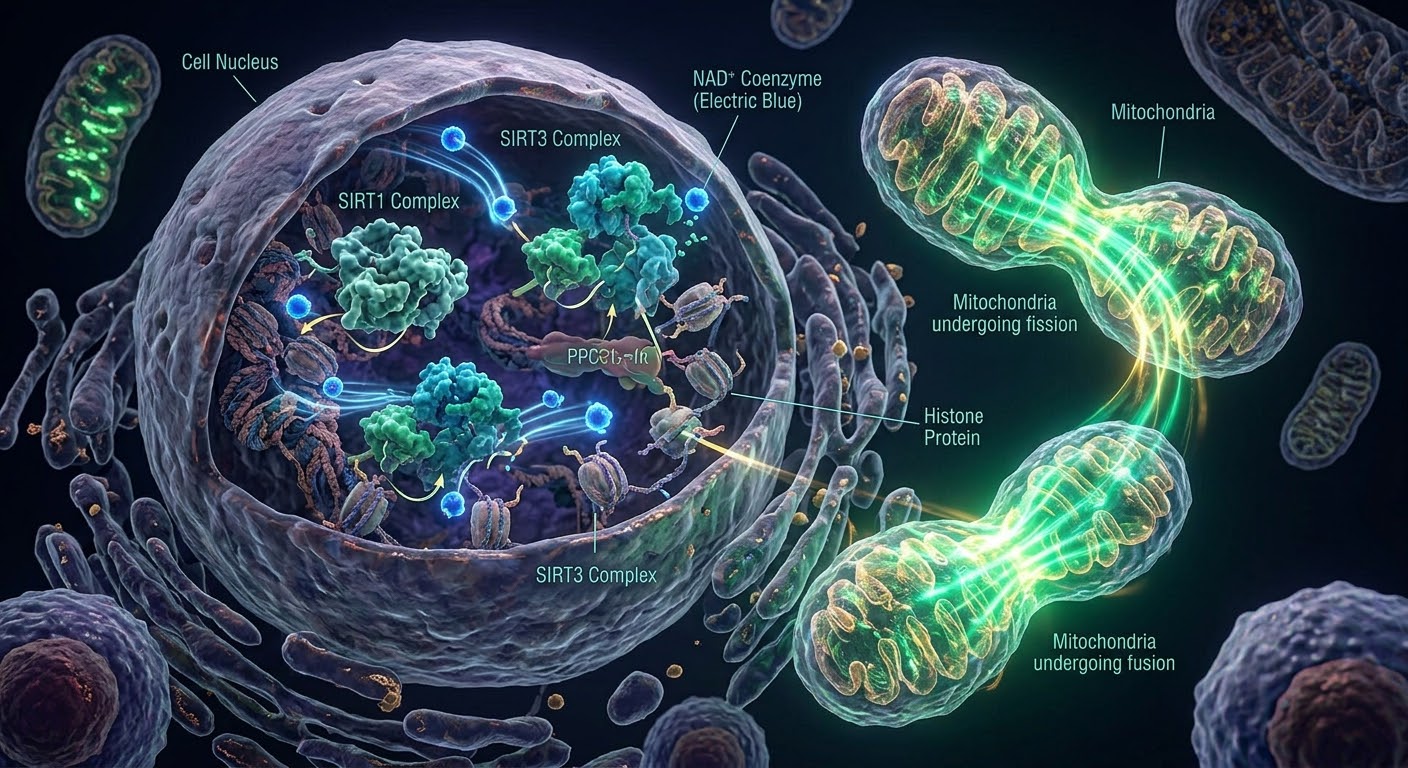
Sirtuins are NAD+ dependent Class III histone deacetylases (HDACs) that act as cellular metabolic sensors. Nuclear SIRT1 and mitochondrial SIRT3 regulate gene expression, energy expenditure, and antioxidant defense. Age-dependent depletion of intracellular NAD+ pools, driven by overactive CD38 ectoenzymes, suppresses Sirtuin deacetylase activity, causing mitochondrial dysfunction, hyperacetylated proteins, and metabolic decline.
1. PGC-1alpha Deacetylation and SOD2 Mitochondrial Activation
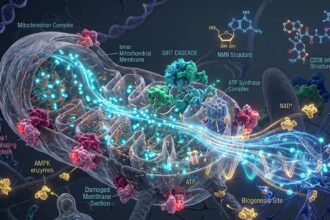
Activated SIRT1 deacetylates the transcriptional coactivator PGC-1alpha, promoting nuclear transcription of NRF-1 and TFAM, which drives mitochondrial DNA replication. Concurrently, mitochondrial SIRT3 deacetylates Superoxide Dismutase 2 (SOD2) at Lys68 and Isocitrate Dehydrogenase 2 (IDH2), enhancing ROS scavenging and oxidative phosphorylation efficiency. Both enzymes require adequate NAD+ turnover as an essential co-substrate.
[ BIOCHEMICAL PATHWAY // NAD+ SALVAGE RECYCLING ]
The primary mechanism for maintaining intracellular NAD+ pools in mammalian cells is the Salvage Pathway:
└─► NAMPT (Rate-Limiting Step)
└─► Nicotinamide Mononucleotide (NMN)
└─► NMNAT1-3
└─► Nicotinamide Adenine Dinucleotide (NAD+)
*Inhibiting CD38 ecto-enzymes prevents systemic NAD+ degradation and boosts cellular Sirtuin availability.
2. Cellular Acetylation State Profile
Declining NAD+ levels suppress SIRT1/SIRT3 activity, allowing hyperacetylation of PGC-1alpha and SOD2, leading to oxidative stress and impaired ATP production.
Sustained NAD+ levels support SIRT1/SIRT3 deacetylase function, optimizing electron transport chain efficiency and increasing mitochondrial density.
3. NAD+ Precursors & Sirtuin Activating Compounds (STACs)
4. NAMPT Rate-Limiting Regulation and Circadian Rhythms
The central circadian transcription factor CLOCK:BMAL1 directly regulates the promoter region of Nicotinamide Phosphoribosyltransferase (NAMPT). NAMPT converts Nicotinamide into NMN, controlling oscillating NAD+ levels. Disrupted sleep architecture and metabolic stress suppress NAMPT expression, dampening NAD+ oscillations. Synchronizing precursor administration with circadian rhythms optimizes NAMPT feedback loops and restores mitochondrial performance.
5. The Metabolic Sirtuin/NAD+ Optimization Protocol
Administer Apigenin to suppress CD38 ectoenzyme activity, preventing systemic NAD+ breakdown and preserving baseline intracellular pools.
Pair NMN supplementation with Trans-Resveratrol in the morning to drive SIRT1/SIRT3 nuclear and mitochondrial target protein deacetylation.
6. Global Wellness Lab Verdict
Maintaining cellular metabolic vitality requires elevated NAD+ pools and active Sirtuin deacetylases. Inhibiting CD38 consumption alongside NMN loading restores PGC-1alpha and SOD2 function, optimizing cellular bioenergetics and preserving mitochondrial health.
- Imai, S., & Guarente, L. (2014). “NAD+ and sirtuins in aging and disease.” Trends in Cell Biology, 24(8), 464-471.
- Yoshino, J., et al. (2018). “NAD+ intermediates: The biology and therapeutic potential of NMN and NR.” Cell Metabolism, 27(3), 513-528.
- Cambronne, X. A., et al. (2016). “Biosensor reveals multiple sources for mitochondrial NAD+.” Science, 352(6292), 1474-1477.
- Escande, C., et al. (2013). “Flavonoid apigenin is an inhibitor of the NAD+ase CD38: implications for cellular NAD+ metabolism.” Diabetes, 62(4), 1084-1093.
Global Wellness Lab
“Resilience is not the absence of stress, but the biological capacity to manage it without systemic degradation.”
Page Contents
Toggle