Cardiology Science | Technical Level: Intermediate | Read Time: 10 min
The human heart is the most mitochondrial-dense organ in the body, requiring a constant, uninterrupted supply of ATP (Adenosine Triphosphate). In 2026, cardiovascular optimization has moved beyond cholesterol management to focus on Bio-Energetic Resilience—ensuring the cardiac muscle has the cellular fuel necessary to maintain stroke volume and rhythm stability.
1. The Mitochondrial Engine: Coenzyme Q10
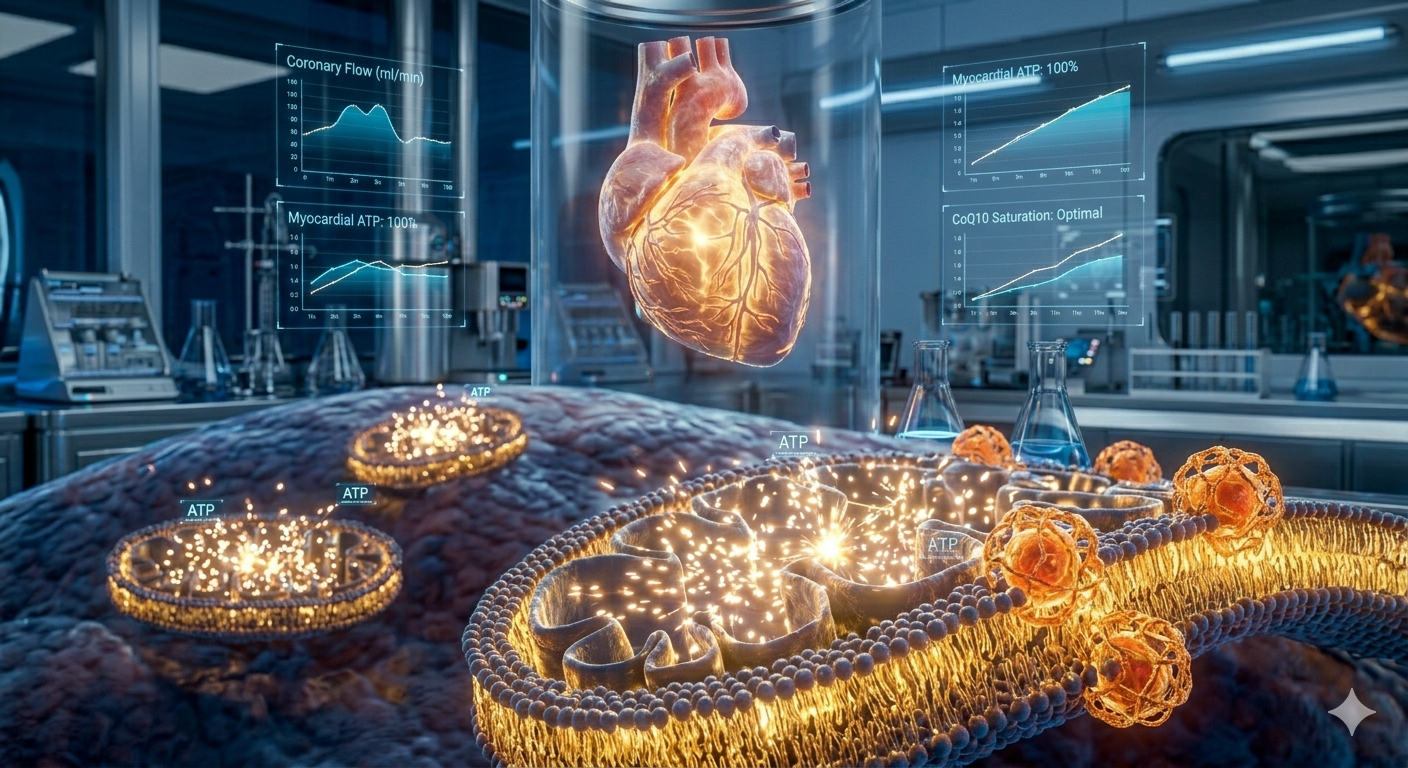
Coenzyme Q10 (CoQ10) is a critical component of the Electron Transport Chain. It acts as a spark plug within the mitochondria, facilitating the transfer of electrons to create energy. As we age, or through the use of specific medications like statins, endogenous production of CoQ10 declines, leading to “cardiac fatigue” and increased oxidative stress.
2. New Block: Bio-Efficiency Mechanisms (The Energy Flow)
Diferente dos modelos anteriores, este bloco detalha o processo de conversão energética:
- Electron Transfer: CoQ10 shuttles electrons between complexes I, II, and III of the mitochondria.
- Oxidative Shield: In its reduced form, it neutralizes lipid peroxyl radicals that threaten the integrity of cell membranes.
- ATP Synthesis: The efficient flow of electrons maximizes the proton gradient, resulting in higher ATP output for cardiac contraction.
- Endothelial Protection: Enhances nitric oxide bioavailability, supporting healthy vasodilation and blood pressure regulation.
3. The 2026 Dosage & Synergy Audit
To maximize cardiovascular impact, our technical audit suggests a precision-dosing approach:
- Ubiquinol vs. Ubiquinone: For individuals over 40, Ubiquinol (the reduced form) is technically superior due to its immediate bioavailability and superior absorption without requiring enzymatic conversion.
- Lipid-Matrix Delivery: CoQ10 is strictly fat-soluble. It must be delivered in an oil-based softgel or consumed with healthy lipids (like Avocado or Omega-3s) to cross the intestinal barrier.
- PQQ Synergy: Pairing CoQ10 with PQQ (Pyrroloquinoline Quinone) triggers mitochondrial biogenesis—essentially growing new “engines” while CoQ10 fuels the existing ones.
- Selenium Integration: Selenium is required to recycle Ubiquinone back into Ubiquinol, creating a self-sustaining antioxidant cycle.
GWL Lab Tip: If you are implementing our Heavy Metal Purity Protocol, pay close attention to your Selenium levels. Heavy metals like Mercury can bind to Selenium, making it unavailable for CoQ10 recycling and compromising heart health.
4. Advanced Clinical Audit
Monitoring cardiac efficiency in 2026 involves more than blood pressure:
- HRV (Heart Rate Variability): A key marker of autonomic balance and mitochondrial recovery.
- Lipoprotein(a) Screening: Identifying genetic risk factors that necessitate higher antioxidant protection for the arterial walls.
- Magnesium Balance: Ensuring adequate Magnesium levels to prevent arrhythmias and support the ATP-binding process initiated by CoQ10.
5. Global Wellness Lab Verdict
Cardiovascular health is a matter of energy management. By supplementing the heart’s natural coenzymes and protecting mitochondrial function, you ensure long-term structural and functional resilience. The goal is not just a beating heart, but an efficient one.
Legal Disclaimer: This is a technical educational analysis and does not substitute professional medical advice.