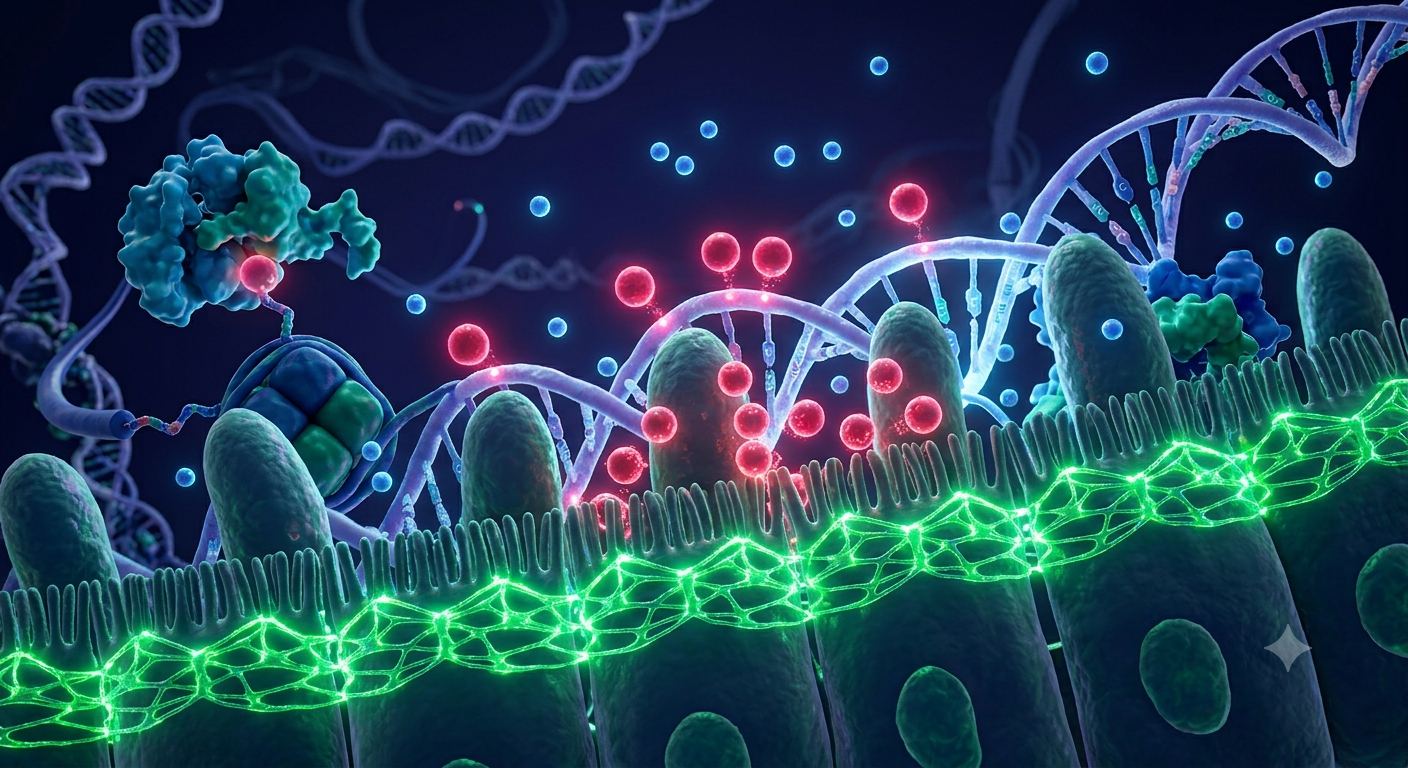
Intestinal Epithelial Barrier Integrity & Microbiome Protocols
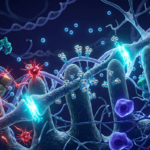
The intestinal barrier forms a single-cell thick mucosal interface spanning hundreds of square meters, responsible for selectively absorbing essential nutrients while excluding luminal pathogens and toxic macromolecules. Disruption of intercellular junctional complexes—primarily Claudins, Occludins, and Zonula Occludens-1 (ZO-1)—leads to hyper-permeability (“leaky gut”). This degradation allows bacterial Lipopolysaccharides (LPS) to translocate into portal circulation, triggering systemic metabolic endotoxemia and chronic tissue inflammation.
1. Tight Junction Dynamics and Metabolic Endotoxemia
Tight junctions are dynamic protein structures that seal the paracellular space between adjacent enterocytes. Elevated levels of zonulin—a protein triggered by dysbiosis or dietary irritants—bind to epidermal growth factor receptors, disassembling ZO-1 scaffolding and increasing intestinal permeability. When LPS enters systemic circulation, it activates Toll-Like Receptor 4 (TLR4) on immune cells, driving systemic inflammatory cytokine cascades that compromise hepatic, cardiovascular, and neural function.
2. Epithelial Permeability Profile
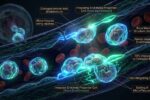
Elevated Zonulin drives paracellular leakage, allowing endotoxins to enter circulation and trigger TLR4-mediated systemic inflammation.
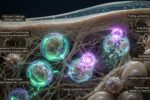
High butyrate levels fuel colonocytes, stimulate mucin-2 layer thickness, and reinforce tight junction protein complexes.
3. Mucosal Protective Agents & Substrates
4. The Mucus Layer and Short-Chain Fatty Acid Crosstalk
A healthy mucosal system relies on a dual-layered gel predominantly composed of Mucin-2 (MUC2), synthesized by goblet cells. Commensal anaerobic bacteria ferment dietary fiber into Short-Chain Fatty Acids (SCFAs)—acetate, propionate, and butyrate. Butyrate serves as the primary energy source for colonocytes, driving oxygen consumption to maintain physiological hypoxia within the gut lumen, a necessary condition for suppressing facultative pathogenic enterobacteria.
5. The Gut Barrier Reconstruction Protocol
Administer Zinc L-Carnosine paired with Tributyrin to rapidly promote tight junction protein assembly (ZO-1, Occludin) and reduce systemic LPS translocation.
Introduce pasteurized Akkermansia muciniphila along with targeted fermentable fibers to expand the MUC2 protective gel layer and establish luminal hypoxia.
6. Global Wellness Lab Verdict
Preserving intestinal epithelial integrity is fundamental for preventing systemic metabolic endotoxemia. By combining tight junction repair compounds with SCFA-inducing substrates and mucosal membrane modulators, protocol strategies systematically safeguard barrier defense mechanisms.
- Fasano, A. (2012). “Zonulin and its regulation of intestinal barrier function: the biological door to inflammation, autoimmunity, and cancer.” Physiological Reviews, 92(1), 151-175.
- Cani, P. D., et al. (2008). “Changes in gut microbiota control metabolic endotoxemia-induced obesity and diabetes in mice.” Diabetes, 57(6), 1470-1481.
- Plovier, H., et al. (2017). “A purified membrane protein from Akkermansia muciniphila or the pasteurized bacterium improves metabolism in obese and diabetic mice.” Nature Medicine, 23(1), 107-113.
- Koh, A., et al. (2016). “From dietary fiber to host physiology: Short-chain fatty acids as key bacterial metabolites.” Cell, 165(6), 1332-1345.
Global Wellness Lab
“Resilience is not the absence of stress, but the biological capacity to manage it without systemic degradation.”
Page Contents
Toggle