Epigenetic Rejuvenation Protocols: DNA Methylation Clocks & Yamanaka Signaling
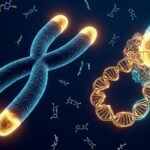
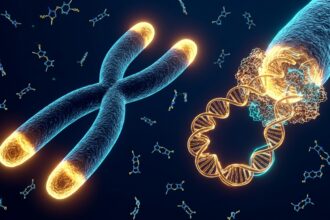
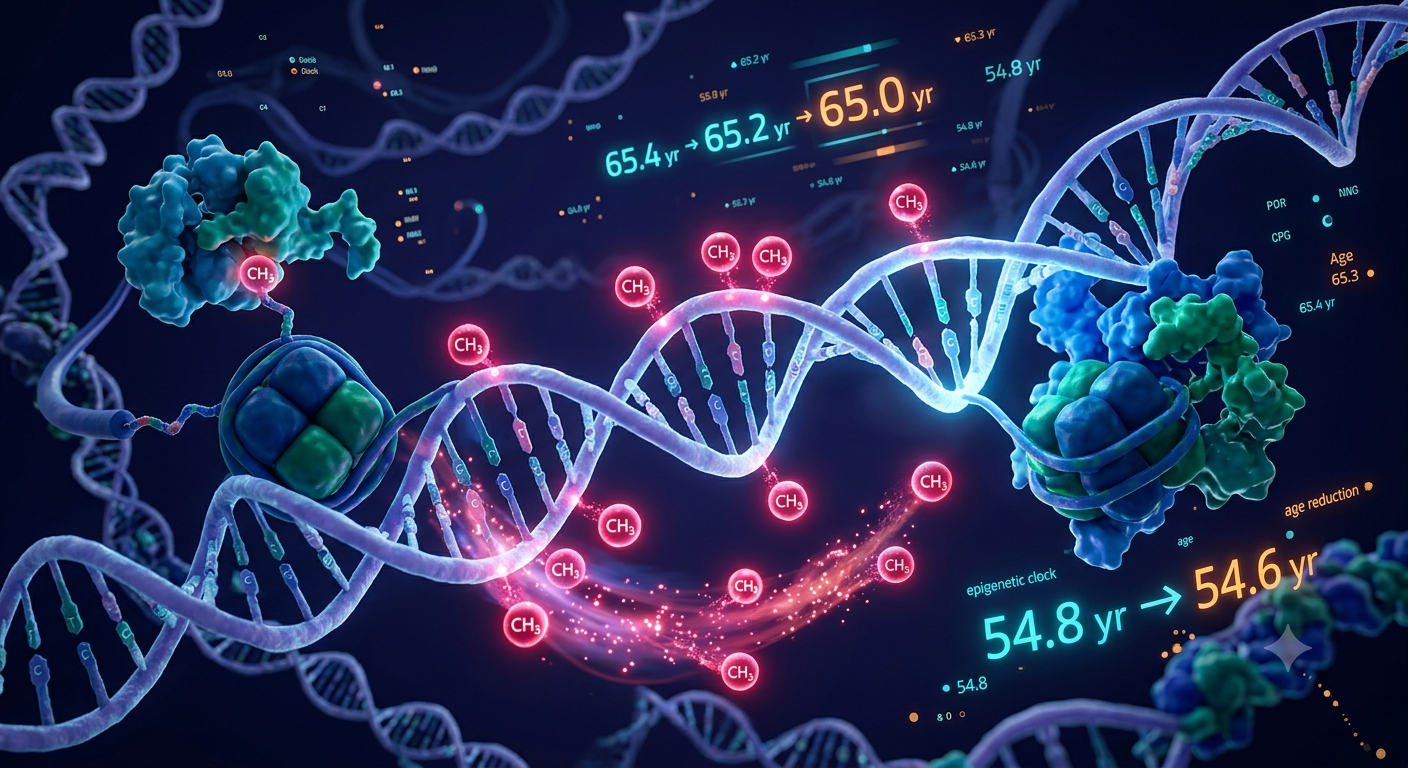
Epigenetic drift—the progressive, age-associated degradation of DNA methylation patterns and chromatin architecture—serves as a primary driver of tissue functional decay. DNA methylation clocks (such as the Horvath, Hannum, and GrimAge algorithms) measure biological age with high precision by tracking 5-methylcytosine (5mC) modifications at specific CpG sites. Epigenetic rejuvenation strategies aim not merely to slow epigenetic tick rates, but to reverse biological age by activating Ten-Eleven Translocation (TET) demethylases and applying cyclic partial cellular reprogramming using OSK (Oct4, Sox2, Klf4) factors.
1. TET Enzymatic Demethylation & OSK Reprogramming
TET enzymes (TET1, TET2, TET3) are Fe(II)- and α-ketoglutarate-dependent dioxygenases that iteratively oxidize 5mC into 5-hydroxymethylcytosine (5hmC), leading to active DNA demethylation. Concurrently, transient pulsed expression of three Yamanaka factors—Oct4, Sox2, and Klf4 (OSK)—erases age-related epigenetic noise and restores youthful histone methyl marks (such as H3K9me3) without resetting somatic cell identity or inducing pluripotency-associated teratomas.
2. Epigenetic Drift Assessment
Accumulation of aberrant methyl marks at promoter islands silences protective longevity genes and exposes repetitive transposable genomic elements.
Active TET demethylation coupled with cyclic OSK signaling rewinds DNA methylation clocks and restores youthful gene transcription profiles.
3. Epigenetic Modulators & Methylation Substrates
4. One-Carbon Metabolism & Epigenetic Fidelity
The one-carbon metabolic network—driven by folate and methionine cycles—synthesizes S-Adenosylmethionine (SAMe), the universal methyl donor for DNMT enzymes. Age-related decline in methyl donor availability causes stochastic loss of DNA methylation in heterochromatin regions, triggering genomic instability. Optimizing one-carbon metabolic flux ensures adequate SAMe production, allowing DNMTs to faithfully copy methylation patterns during cell division.
5. The Epigenetic Clock Reset Protocol
Supplement with sustained-release Calcium-AKG daily to maintain elevated intracellular α-ketoglutarate levels, stimulating TET-driven 5mC oxidation and demethylation.
Integrate methylated B-vitamins (5-MTHF, Methyl-B12) with targeted Sulforaphane to maintain SAMe reserves and prevent aberrant histone deacetylation.
6. Global Wellness Lab Verdict
Biological age, as encoded by DNA methylation landscapes, is a malleable cellular parameter. By combining active TET-mediated demethylation through intermediate metabolites with precise one-carbon donor management, it is possible to erase accumulated epigenetic drift and rewind biological clocks.
- Horvath, S. (2013). “DNA methylation age of human tissues and cell types.” Genome Biology, 14(10), R115.
- Lu, Y., et al. (2020). “Reprogramming to recover youthful epigenetic information and restore vision.” Nature, 588(7836), 124-129.
- Shahmirzadi, A. A., et al. (2020). “Alpha-ketoglutarate, an endogenous metabolite, extends lifespan and compresses morbidity in aging mice.” Cell Metabolism, 32(3), 447-456.
- Wu, X., & Zhang, Y. (2017). “TET-mediated active DNA demethylation: mechanism, function and beyond.” Nature Reviews Genetics, 18(9), 517-534.
- Ocampo, A., et al. (2016). “In vivo amelioration of age-associated hallmarks by partial reprogramming.” Cell, 167(7), 1719-1733.
Global Wellness Lab
“Resilience is not the absence of stress, but the biological capacity to manage it without systemic degradation.”
Page Contents
Toggle