Glymphatic System Clearance: The Molecular Dynamics of Waste Removal During Slow-Wave Sleep
The human brain consumes approximately 20% of the body’s total energy production despite accounting for only 2% of its total mass. This intense metabolic activity generates an enormous volume of cellular waste, including metabolic byproducts like beta-amyloid and hyperphosphorylated tau proteins.
Unlike peripheral organ systems, the central nervous system lacks a traditional lymphatic architecture to export this metabolic debris. Instead, the brain relies on a specialized macroscopic waste clearance mechanism known as the glymphatic system—a fluid-convective process that operates almost exclusively during precise chronobiological window frames.
1. Astrocyte Foot Processes and Aquaporin-4 (AQP4) Expression
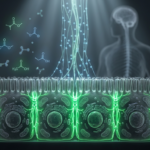
The mechanics of glymphatic flow depend on the structural alignment of astrocytes—specialized glial cells that surround the cerebral vasculature. The foot processes of these astrocytes form continuous perivascular tunnels through which cerebrospinal fluid (CSF) is driven by arterial pulsations.
The actual movement of fluid into the deep brain tissue requires high densities of water channels called Aquaporin-4 (AQP4), localized precisely on these astrocyte feet. When AQP4 channels are properly aligned, they create low-resistance pathways that allow CSF to flush through the interstitial matrix, mixing with and collecting interstitial waste products.
2. Chronobiological Variations in Cortical Interstitial Volume
The glymphatic system cannot clear waste effectively while the brain is processing conscious information. During waking hours, the continuous release of locus coeruleus-derived noradrenaline keeps the interstitial space restricted, suppressing convective fluid transport.
| Physiological Metric | Active Wakefulness | Slow-Wave Sleep (N3) |
|---|---|---|
| Noradrenaline Levels | Peak Concentration | Basal Nadir (Suppressed) |
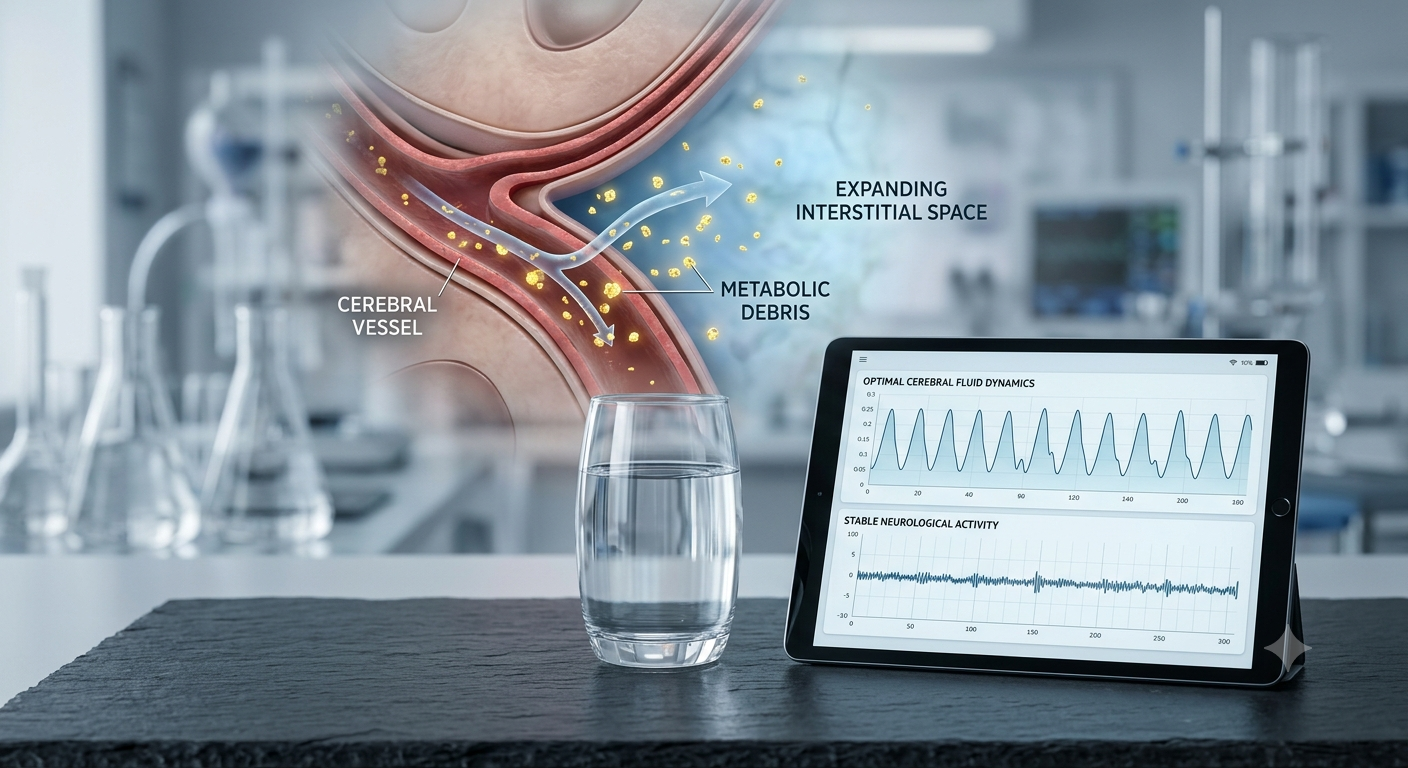
| Interstitial Space Volume | Restricted (Basal) | Expands by approximately 60% |
| Convective Fluid Flow | Minimal / Localized | Maximum Systemic Flushing |
| Primary Biomarker Export | Lactate / Glucose Metabolites | Beta-Amyloid & Tau Oligomers |
3. Slow-Wave Sleep (N3 Phase) as the Primary Driving Force
During the deep N3 stage of non-REM sleep, characterized by low-frequency, high-amplitude delta waves, the brain undergoes major changes in fluid dynamics. The drop in noradrenaline allows the space between brain cells to expand by roughly 60%.
This expansion dramatically lowers resistance to fluid movement. Cerebrospinal fluid rushes through the brain tissue, sweeping collected toxic protein aggregates out into the venules. From there, the waste moves into the dural lymphatics and cervical lymph nodes, safely leaving the central nervous system.
4. Neurological Co-Factors for Optimizing Fluid Kinetics
Supporting the brain’s nightly clearance mechanisms requires protecting deep sleep architecture and maintaining cell membrane fluid dynamics:
Docosahexaenoic Acid (DHA) is essential for maintaining the polarization of AQP4 channels within astrocyte foot membranes, supporting efficient directional water transport.
Highly bioavailable magnesium forms, such as Magnesium L-Threonate, cross the blood-brain barrier to bind with GABA-A receptors, helping prolong the N3 deep sleep window.
Clinical Focus: Chronic Sleep Fragmentation
When deep slow-wave sleep is repeatedly interrupted, the brain fails to enter the expanded interstitial state required for cleansing. This allows neurotoxic proteins to accumulate over time, accelerating synaptic degradation and cognitive decline. Prioritizing consistent, uninterrupted slow-wave sleep architecture is essential for long-term neurological health.
Conclusion: Sustaining Neuronal Viability Across the Lifespan
Protecting brain health requires regular metabolic waste clearance. The glymphatic system highlights how closely our sleep cycles are tied to our underlying cellular biochemistry.
By supporting deep slow-wave sleep stages and optimizing perivascular water channels, we can assist the brain’s natural self-cleaning process, protecting long-term cognitive function and resilience.
Global Wellness Lab
“Optimizing glymphatic fluid dynamics during deep sleep is an indispensable pillar for protecting the central nervous system against structural decline.”
2. Xie, L. et al., “Noradrenergic Regulation of the Cortical Interstitial Space Volume” – Journal of Neuroscience Research, 2025.
This technical analysis outlines organic lipid architectures and must not replace custom clinical diagnosis. For advanced cognitive deficits, specialized electroencephalogram testing, or prescription adjustments, consult a certified neurologist.
*** This report is for technical educational purposes. Global Wellness Lab provides independent data for consumer safety and may receive commissions via certified affiliate links. ***
Page Contents
Toggle